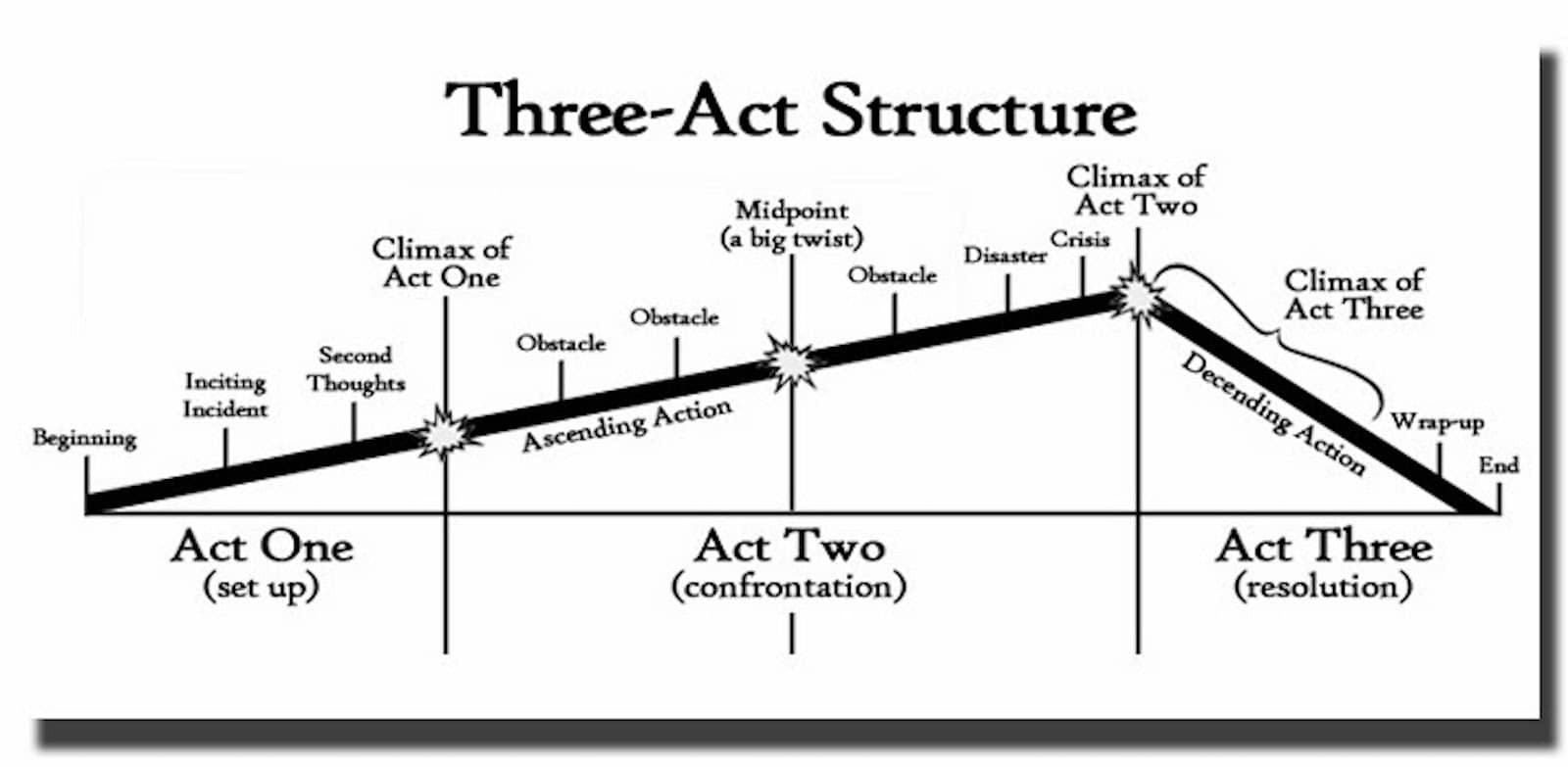
First choose which kind of structure you want.
1. Three act structure - for those who can't handle structure.
Act I: The Setup (or Exposition)
This act introduces the main characters, their world, and establishes the initial conflict or problem that will drive the story. It also often includes an inciting incident that sets the protagonist on their journey. The first act typically takes up the first 25% of the story.
Act II: The Confrontation (or Rising Action)
This act focuses on the protagonist's attempts to deal with the established conflict, facing escalating challenges and obstacles. This is where the stakes are raised, and the character experiences both successes and setbacks. This act is usually the longest, taking up about 50% of the story.
Act III: The Resolution (or Falling Action)
This act brings the story to a conclusion, resolving the central conflict and showing the consequences of the protagonist's actions. It often involves a climax, where the conflict reaches its peak, and a resolution, where loose ends are tied up and the story finds its ending. This act typically takes up the remaining 25% of the story.
2. Five act structure - a better system for those who can handle self-discipline.
Exposition:
This initial act introduces the characters, setting, and initial situation of the story. It lays the groundwork for the narrative by providing essential background information.
Rising Action:
This act builds tension and conflict as the protagonist faces challenges and obstacles. It's a period of increasing stakes and complications that lead towards the climax.
Climax:
This is the turning point of the story, the moment of highest tension and drama. The protagonist confronts the central conflict, and the outcome is uncertain.
Falling Action:
Following the climax, this act shows the consequences of the protagonist's actions and the unraveling of the conflict. The tension begins to decrease as the story moves towards its conclusion.
Resolution:
The final act provides closure to the story, resolving any remaining conflicts and tying up loose ends. It offers a sense of completion and allows the audience to reflect on the journey.
3. Kishōtenketsu - eastern story structure for those 'what the fuck' or 'holy shit!' endings
Ki (起) - Introduction:
Establishes the setting, characters, and basic situation.
Shō (承) - Development:
Further develops the characters and setting, building upon the introduction.
Ten (転) - Twist/Reversal:
Introduces an unexpected element or event that shifts the narrative direction.
Ketsu (結) - Conclusion/Reconciliation:
Connects the twist back to the initial elements, often offering a harmonious or thought-provoking resolution.