Writing How do I write a pre planned novel?

OokamiKasumi

Author of Quality Smut
Joined
Mar 20, 2021
Messages
398
Points
133
I want to write a novel with planning done ahead of it. Most of the time I just write on the fly without having an actual structural plot, I guess that's why my novel feel like schizophrenia mess. Please give a bit of advice.
Yes, writing a story as it comes to you, until you just can't write it anymore is called "Writing by the Seat of your Pants." Such writers are called Pantsers, for short.

Those of us who plan before we write are called Plotters.

This is one of the simpler ways that I Plot stories:

Link --> [Tutorial] From Idea to STORY
 
Last edited:

velvetvertigo

Member
Joined
Apr 26, 2025
Messages
33
Points
18
First choose which kind of structure you want.

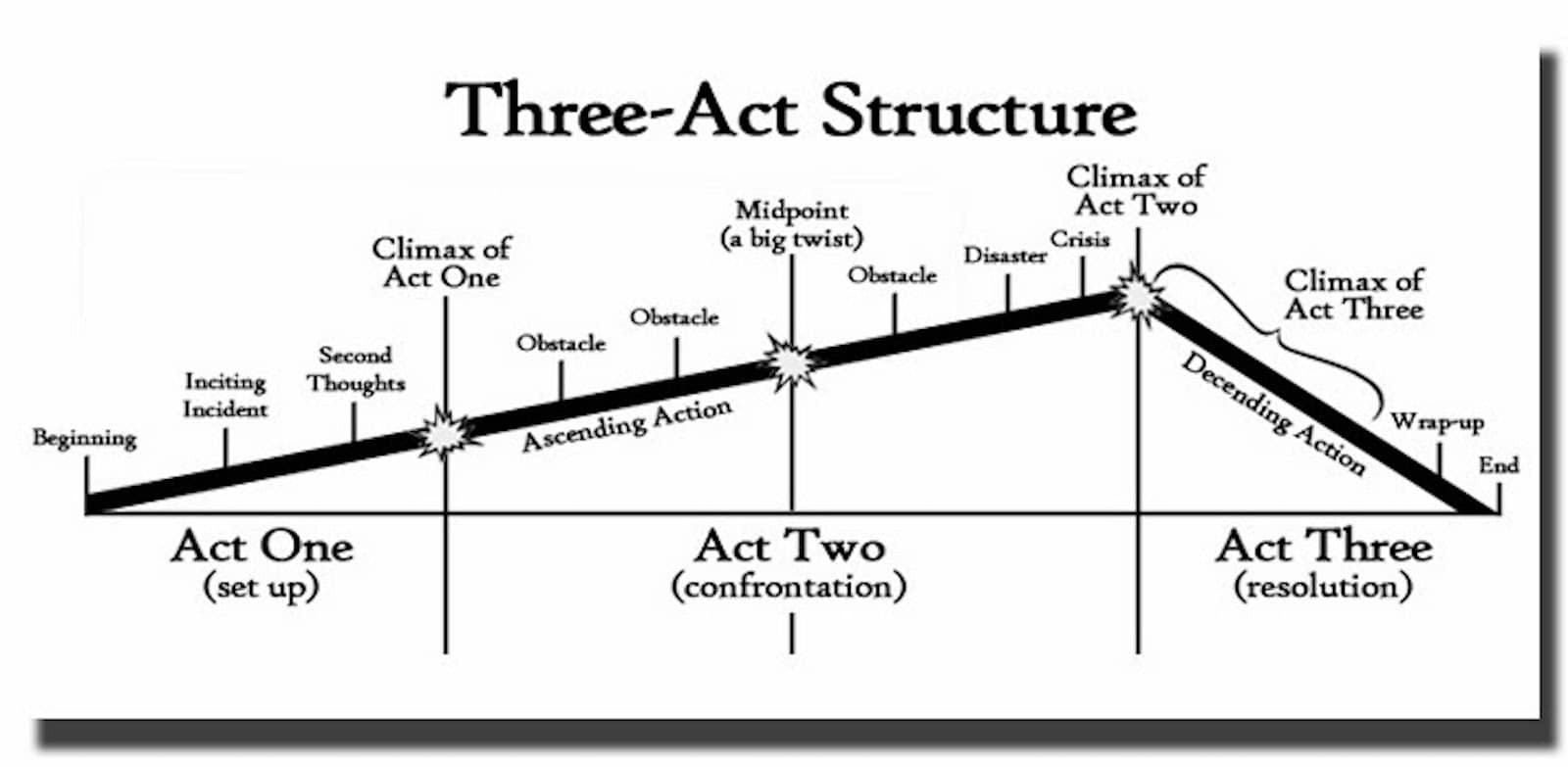
1. Three act structure - for those who can't handle structure.


Act I: The Setup (or Exposition)
This act introduces the main characters, their world, and establishes the initial conflict or problem that will drive the story. It also often includes an inciting incident that sets the protagonist on their journey. The first act typically takes up the first 25% of the story.
Act II: The Confrontation (or Rising Action)
This act focuses on the protagonist's attempts to deal with the established conflict, facing escalating challenges and obstacles. This is where the stakes are raised, and the character experiences both successes and setbacks. This act is usually the longest, taking up about 50% of the story.
Act III: The Resolution (or Falling Action)
This act brings the story to a conclusion, resolving the central conflict and showing the consequences of the protagonist's actions. It often involves a climax, where the conflict reaches its peak, and a resolution, where loose ends are tied up and the story finds its ending. This act typically takes up the remaining 25% of the story.


2. Five act structure - a better system for those who can handle self-discipline.


Exposition:
This initial act introduces the characters, setting, and initial situation of the story. It lays the groundwork for the narrative by providing essential background information.
Rising Action:
This act builds tension and conflict as the protagonist faces challenges and obstacles. It's a period of increasing stakes and complications that lead towards the climax.
Climax:
This is the turning point of the story, the moment of highest tension and drama. The protagonist confronts the central conflict, and the outcome is uncertain.
Falling Action:
Following the climax, this act shows the consequences of the protagonist's actions and the unraveling of the conflict. The tension begins to decrease as the story moves towards its conclusion.
Resolution:
The final act provides closure to the story, resolving any remaining conflicts and tying up loose ends. It offers a sense of completion and allows the audience to reflect on the journey.

3. Kishōtenketsu - eastern story structure for those 'what the fuck' or 'holy shit!' endings


Ki (起) - Introduction:
Establishes the setting, characters, and basic situation.
Shō (承) - Development:
Further develops the characters and setting, building upon the introduction.
Ten (転) - Twist/Reversal:
Introduces an unexpected element or event that shifts the narrative direction.
Ketsu (結) - Conclusion/Reconciliation:
Connects the twist back to the initial elements, often offering a harmonious or thought-provoking resolution.

Thanks for sharing this!!
Note that the 3-act structure is typically used in classical drama (plays and movies). The five-act structure is typical of television shows.

Ok, so a long serialized novel in platforms such as scribblehub (or wattpad, or anything else) is the equivalent of a movie, or a television show?
 

OokamiKasumi

Author of Quality Smut
Joined
Mar 20, 2021
Messages
398
Points
133
First choose which kind of structure you want.

1. Three act structure - for those who can't handle structure.


Act I: The Setup (or Exposition)
This act introduces the main characters, their world, and establishes the initial conflict or problem that will drive the story. It also often includes an inciting incident that sets the protagonist on their journey. The first act typically takes up the first 25% of the story.
Act II: The Confrontation (or Rising Action)
This act focuses on the protagonist's attempts to deal with the established conflict, facing escalating challenges and obstacles. This is where the stakes are raised, and the character experiences both successes and setbacks. This act is usually the longest, taking up about 50% of the story.
Act III: The Resolution (or Falling Action)
This act brings the story to a conclusion, resolving the central conflict and showing the consequences of the protagonist's actions. It often involves a climax, where the conflict reaches its peak, and a resolution, where loose ends are tied up and the story finds its ending. This act typically takes up the remaining 25% of the story.


2. Five act structure - a better system for those who can handle self-discipline.


Exposition:
This initial act introduces the characters, setting, and initial situation of the story. It lays the groundwork for the narrative by providing essential background information.
Rising Action:
This act builds tension and conflict as the protagonist faces challenges and obstacles. It's a period of increasing stakes and complications that lead towards the climax.
Climax:
This is the turning point of the story, the moment of highest tension and drama. The protagonist confronts the central conflict, and the outcome is uncertain.
Falling Action:
Following the climax, this act shows the consequences of the protagonist's actions and the unraveling of the conflict. The tension begins to decrease as the story moves towards its conclusion.
Resolution:
The final act provides closure to the story, resolving any remaining conflicts and tying up loose ends. It offers a sense of completion and allows the audience to reflect on the journey.

3. Kishōtenketsu - eastern story structure for those 'what the fuck' or 'holy shit!' endings


Ki (起) - Introduction:
Establishes the setting, characters, and basic situation.
Shō (承) - Development:
Further develops the characters and setting, building upon the introduction.
Ten (転) - Twist/Reversal:
Introduces an unexpected element or event that shifts the narrative direction.
Ketsu (結) - Conclusion/Reconciliation:
Connects the twist back to the initial elements, often offering a harmonious or thought-provoking resolution.

There's these too:


Story-Structures-2.png
 

A_the_king_of_all

Active member
Joined
Aug 8, 2025
Messages
102
Points
43
Wait we both the same thing like i also write on the fly but I usually write a rough draft 1st then use that to refine it (mostly adding details and making it readable)
 

mythosandmagic

Active member
Joined
Aug 13, 2025
Messages
128
Points
43
I write in AutoCrit almost exclusively on the fly. The good part about it is that it does a fiction analysis and gives you insight into what you've written.
Here is one category analysis of my first chapter, A Story to Tell.
I hope this is okay to post. If not, please let me know.

A Story to Tell
Synopsis

The chapter opens with a vivid depiction of the village of Celestria, establishing its serene, proud character and its proximity to the royal Castle. The narrative is presented from a third-person omniscient point of view, allowing insight into Sarah Holloway’s inner thoughts, feelings, and motivations, as well as the external environment and other characters’ perspectives.

Sarah Holloway, a bright and perceptive nine-year-old girl, is introduced through her daily routine and her inner world. She is described as energetic and mature beyond her years, with an unspoken desire to understand her homeland’s history and her place within it. Her physical description is minimal—long blonde hair, which she wears in a way that sways as she moves—focusing more on her intellectual curiosity and her earnestness. Her wants are driven by a thirst for knowledge, a desire to connect with her heritage, and a sense of importance in uncovering the stories of Celestria. Her need for validation and her tendency to be misunderstood or envied by her peers highlight her vulnerability and her flaw: her sensitivity to social dynamics and her sometimes solitary pursuit of knowledge.

The chapter transitions into her classroom experience, where her teacher, Miss Elowen, encourages her curiosity and assigns her a project on Celestria’s history. The scene emphasizes Sarah’s academic excellence and her genuine passion for learning. Her parents’ brief interactions at dinner reveal her supportive family environment, with her mother suggesting she explore old maps and journals, hinting at Sarah’s inclination toward historical and mystical exploration. Her physical description remains minimal, but her demeanor—focused and contemplative—underscores her inner drive.

Sarah’s exploration of her family’s attic and her visit to the civic archive illustrate her determination and curiosity. Her desire to piece together her homeland’s origins and her need for understanding are evident in her meticulous research. Her flaw surfaces in her somewhat obsessive pursuit, as she neglects social comfort and perhaps overvalues her intellectual pursuits over other aspects of her life.

The chapter concludes with her presentation in class, where she shares her story of creation and the origins of Celestria. Her narrative is poetic and heartfelt, revealing her deep emotional connection to her homeland’s mythos. Her physical appearance—long blonde hair, modest dress—serves as a backdrop to her expressive storytelling. Her internal conflict—whether her story will resonate or be understood—culminates in her feeling of being part of the story itself, which she articulates with sincerity and vulnerability.

The chapter closes with Sarah feeling a sense of accomplishment and belonging, as Miss Elowen praises her, and she steps out into the sunlight, her inner need for connection and understanding momentarily fulfilled. Her night’s reflection underscores her ongoing desire to be part of something larger—her personal flaw of sometimes feeling isolated in her quest for knowledge—and her hope that her story is still unfolding. The closing scene emphasizes her emotional growth and her readiness to embrace her role as a storyteller and explorer of her world’s mysteries.


Several sections follow:
Conflict
Characters
Deep POV
World Building
Possible contradiction events
Timeline analysis
Foreshadowing Events
Plot thread tracking
Genre analysis
Hooks:
Here are key quotes from the chapter that would serve as compelling hooks for marketing, each selected for their ability to evoke curiosity, emotion, or intrigue:

  1. "Most of her classmates just watched—some with curiosity, others barely paying attention. One boy leaned forward like he cared. A girl near the window was already half-asleep."
    Why: This vivid scene captures the classroom dynamics and hints at Sarah’s quiet determination amid disinterest—inviting readers to discover her story.
  2. "It was not a god, not yet. It was a presence, a thought alone in the void. From that thought came consciousness, then light, and from light came warmth, and from warmth came life."
    Why: A high-concept, cosmic origin story that sparks curiosity about the universe's creation and the deep lore of Celestria.
  3. "I don’t know why it moves me so much. I just feel that this story isn’t over. That it’s not just history, but something still evolving. That I’m part of it, we're all part of it, even if we don’t know how."
    Why: An emotionally resonant quote that invites readers to reflect on their own place in a larger story, hinting at themes of connection and ongoing destiny.
  4. "Sarah sat with her materials neatly ordered around her, and said 'You’re taking this seriously.' 'It doesn’t feel like homework,' Sarah replied without looking up. 'It feels… important.'"
    Why: Showcases Sarah’s passion and the emotional weight she assigns to her discovery, appealing to readers who love stories of curiosity and purpose.
  5. "She felt excited about the opportunity to learn more about their homeland."
    Why: Simple but powerful—evokes a sense of wonder and adventure that appeals to readers who love exploration and discovery.
  6. "She found not only old maps but also journals of people whose names she didn't recognize."
    Why: Suggests hidden histories and mysteries waiting to be uncovered, perfect for intrigue and adventure.
  7. "That night, her mind imagined wonder."
    Why: A poetic, evocative line that hints at the limitless possibilities and the magic of imagination, appealing to dreamers and explorers.
  8. "Some smart people call it something fancy—‘lineal resonance’—but I think it just runs in the family."
    Why: A charming, relatable moment blending scientific intrigue with personal storytelling, adding humor and accessibility.
  9. "The kingdom of Celestria is where existence began, and continues to be the explorer and the caretaker of all of existence."
    Why: A high-concept, grand statement that positions the story within a mythic scope, perfect for capturing the reader’s imagination.
  10. "Sarah’s eyes stayed on the parchment in her hands that she had so carefully written and studied, though the words she was expressing no longer came from it."
    Why: A moment of emotional depth and transcendence, hinting at Sarah’s connection to the story she tells—an invitation to explore themes of identity and purpose.
These quotes are designed to evoke curiosity, emotional resonance, and a sense of wonder—perfect for enticing potential readers to dive into the story.
 

Cookiez_N_Potionz

Rank: Moon Leo
Joined
Sep 27, 2024
Messages
408
Points
78
Beginning, middle, and end.

I normally write a bunch of scenarios down and try to connect them. After the story is complete find spots where things are lacking

Honestly, I'm still a novice
 

ZaraVale

New member
Joined
Aug 20, 2025
Messages
5
Points
3
I have a book bible. All the information needed for the book. From backstories to myths and legends and character information. Then once that is done have the plot points you want to have within the book.
After all this just start writng refeeimg back to the bible as you go.
 
Top