Webnovel Feedback Roasts For the Fearless

Lazytruly

New member
Joined
Mar 13, 2026
Messages
16
Points
3
Well roast is better than silence ,as long as it improves the dao even poison isn't medicine

Try this and give your honest roasts, constructive ones


Anonjohn20

Pen holding member
Joined
Mar 22, 2023
Messages
1,918
Points
153
temproast.png
 

Bayleyrockstar

Well-known member
Joined
Feb 11, 2020
Messages
30
Points
58
Alright. I've enjoyed reading the backlog. Time to throw my hand in. It seems like it'll be entertaining and educational.


Last edited:

Tempokai

The Overworked One
Staff member
Joined
Nov 16, 2021
Messages
1,407
Points
153
I would love some constructive criticism. I have my wife review, but she isn't interested in the story, it could be because it is boring, or, just not her kind of story.

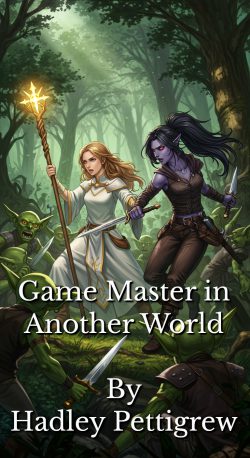
I read three chapters, and the main problem moonwalked into the my mind so loudly it didn’t even bother knocking: the synopsis and the actual story are not dating, not married, not even in the same zip code, and that mismatch poisons the opening before the prose even gets a fair trial. What you advertised was "watch this Dungeon Master get isekai’d and deal with his bizarre new existence," which is at least a sellable little synopsis, the sort of thing a skeptical reader can squint at on a lunch break and think, all right, amuse me, clown. What you delivered was "watch this Dungeon Master hover around like a sentient security camera while the real page-time gets spent on goblins, adventurers, villagers, flirtation, and whatever local hormones happen to be clocking in that evening," which is not the same promise, not the same meal, not even the same overpriced menu you get at Western Isekai Webnovelia.

And that is the engine of the overall meh-ness here, because these chapters are not catastrophically bad (which would at least be memorable), and they are not especially good, which would justify the patience they demanded from me, sitting for 2 hours writing this roast. They live in that miserable middle ground where you can see the author trying, really trying, bless the little overworked hamster on the wheel, to make tabletop-fantasy conventions feel materially real (which isn't even that rare nowadays compared to few years ago). You can see the intended point whenever Geoff watches violence that would have been casual table banter in another life and realizes that flesh, quite rudely, is less abstract than a d20. That part is the actual interesting idea (that is still interesting enough to read). That part has teeth. That part suggests the book might want to be a genre autopsy, or at least a commentary on what happens when game logic stops being cute and starts stinking.

But then the synopsis comes in like a crooked realtor you'd see in those shady places in NY, hands you keys to a cozy one-bedroom premise about a transformed protagonist dealing with having no form at all, and when you open the door you find five adventurers, a goblin camp, a village hookup circuit, and a backgammon lesson already living there rent-free. The contradiction matters because first impressions matter, and a synopsis is not decorative parsley stapled to the page for moral support. It is advertising. It is, quite literally, a packaging. It is the first witness statement that gets ignored in the long run, but that kickstarts that whole damn investigation. If the packaging says one thing and the product coughs up another, readers notice, and readers are not the gentle little lambs authors like to imagine. Sure, there are some gullible, but often they are suspicious, impatient raccoons with a tab limit and five thousand other stories begging to waste their evening. The stuff you disclose in the ad can and will be used against you in the product, because that is how expectation works, you magnificent saboteur.

And because the synopsis is misframed, the protagonist gets damaged by association. If you had clearly pitched this as a story about an invisible, bodiless observer following an adventuring party to understand a new world, I’d be far kinder, which is already a humiliating concession to make. I would still complain, naturally, because civilization depends on standards, but I would at least grant that the early chapters were aiming where they fired. Instead, the synopsis tells me this is Geoff’s show, Geoff’s condition, Geoff’s adaptation, Geoff’s despair, Geoff’s weird little afterlife internship, and then the actual prose keeps nudging him to the side so he can narrate people the synopsis barely bothered to admit existed.

That changes everything. It changes how the reader measures focus, how much patience the opening gets, and whether Geoff feels like a protagonist or just a first-person microphone someone left on. Right now, he is basically a camera with opinions, which sounds cute until you remember the camera is supposed to be a human being at the center of a first-person narrative. He notices things. He compares them to tabletop logic. He occasionally winces on cue. Marvelous. That is still not a personality, that is not pathos that I talk about. That is not a vivid interior life full of human-ness some people expect from the novels. That is a hovering lens pretending that clarity alone can substitute for character. It cannot. A clean windshield that show the road is not a driver driving the car.

And this is why even the stronger material feels slightly displaced, like good furniture delivered to the wrong apartment. The goblin raid in chapter one is actually written pretty well in terms of staging and moral pivot. The nursery thingy detail lands. Geoff’s realization that "clear the tent" sounds very different when you’re not holding chips and Mountain Dew is the first moment the story develops a pulse stronger than mild sightseeing. But because Geoff himself remains so emotionally and psychologically underdrawn, the whole scene lands with a weird hollowness. It has consequence, but not enough soul at the point of contact. The story has built the event more convincingly than the witness, which is a hell of a trick when the witness is also the narrator.

Then there is the logic issue, that beautiful little smell of plot compliance wafting through the room like burnt plastic. Geoff can fly. Geoff can stop instantly. Geoff can go to space. Geoff can apparently drift through forests, hover over villages, and exist without sleep, food, or oxygen, which means you have accidentally given him the movement profile of a player in spectator mode in Minecraft. So what does he do with these absurd freedoms? Does he test his range? Does he investigate boundaries where he can go to? Does he see whether he is tethered to a place, a body, a death site, a magical source, a continent, the planet, anything at all? Does he plunge into the ocean, dive underground, scout the horizon, look for cities, search for landmarks, break the world open with desperate curiosity of an average Minecraft player who first discovered spectator mode in Minecraft? No. He picks a random party and tags along because the plot needs him to and the story has declined to invent a better reason. That is not character logic, that is the author quietly stamping APPROVED on a convenience paperwork and hoping no one notices the ink is still wet.

Chapter two, to be fair, works the best if I squint through the migraines and take Geoff as a passive observer trying to understand how game-like systems manifest as lived reality. The healing-trauma contrast is decent. The party gets some warmth. Fine. There is at least a shape there. But then chapter three arrives and detonates one of those beginner mistakes that should be tattooed on the inside of every writer’s eyelids: do not behave as if readers already love your characters before you have done the exhausting and degrading labor of making them lovable. You cannot spend early chapters cashing in attachment you have not earned. You cannot act like the audience is already delighted to watch village flirting, post-coital breakfast awkwardness, and side-character tenderness when the central premise is still standing outside in the cold asking whether anyone remembers why it was invited.

That is why the slice-of-life pivot fails in POV terms. It is not that village life is inherently bad. It is that I did not come here for these people. I came here for Geoff, because your synopsis told me to. Instead I get villagers I do not know, relationships I have not yet been taught to value, and a protagonist who still has all the urgency of a man browsing a garden center. It feels less like a story progressing and more like an author indulging whatever scene seemed cute that afternoon. Chris gets his girl, Norman gets his old-lizard charm routine, Triss gets a moonlit coaching session with Theo, and Geoff gets to float nearby like a Victorian ghost forced to attend a barn social. Splendid. The man has no body, no answers, no mission, no visible constraints, and apparently enough free time to audit the village libido.

And this all crashes into rhetoric, too, because when the focus is already shaky, the padded prose only makes the wobble more obvious. The extra commas, the softly ornamental descriptions, the occasional adjective pile-ups, the gently lyrical wallpapering of sentences that are mostly just "they walked," "they sat," "they talked," create this strange sensation that the writing is dressing for a gala while the plot is still in pajama pants. It is not unreadable. That would almost be kinder. It is readable in the same way beige carpeting is walkable: technically functional, spiritually numbing.

So yes, there is meat here. There is a real idea trying to crawl out of the wreckage, namely that a former DM is being forced to see fantasy mechanics as material suffering rather than game furniture. That could be good. That could even be sharp. But right now it is trapped under a synopsis that advertises the wrong thing, a protagonist who behaves like spectator mode from Minecraft with occasional moral commentary, and early chapters that keep spending your attention on side characters as if affection were already guaranteed by divine law.

The easiest fix is the synopsis, because right now it is actively damaging the story. Remove the scam note from the sales floor, stop being vague, and clearly signal that Geoff will be following an adventuring party and using that to understand the world. That is not "too spoilery." That is called not lying in your storefront. The hardest fix, and the one that actually matters, is making Geoff feel human from chapter one onward. Give him sharper reactions, stronger curiosity, real constraints, actual inner texture, a reason he can’t simply rocket off into the atmosphere and become the world’s saddest and first satellite in a fantasy world. Show the constraints. Show the limit. Show why this party matters beyond plot convenience, because as it stands, he can apparently touch outer space but not the edges of his own narrative purpose, which is one hell of an achievement, just not the one you wanted.
 

Tempokai

The Overworked One
Staff member
Joined
Nov 16, 2021
Messages
1,407
Points
153
Even though im an ESL, go for it! i can take critical feedback, if its crap just say it! https://www.scribblehub.com/series/786195/the-barriard/

I read three chapters of this thing, and to be fair, I did give it a chance. A few weeks ago, no less, back when I still had the sort of optimism normally found in people buying gas-station sushi at 3AM because you really wanted sushi. I read it, I analyzed it, I poked at it with the long stick one reserves for suspicious roadkill, and then I left it to rot in the backlog. Not because it was too good to criticize, and not because it was too terrible to process, but because it committed the far more humiliating sin of being unsatisfying to roast. It has strengths, yes. It has weaknesses, certainly. It even has the usual little amateur fractures where one could point and mumble some fix about pacing or specificity or dialogue rhythm, like a contractor explaining why your shed collapsed into a pond that doesn't hold water. But, the overwhelming feeling it produced was not outrage, delight, fascination, or even disgust from me. It was the drained, spiritual beige of “this surely is not worth the effort.” That is a harsher verdict than open hatred something can get. Hatred at least means you got a pulse out of me, all this thing mostly got a sigh.

Still, ritual demands sacrifice. Whatever sacrifice it may be, but it must happen.

The synopsis fails at the one job a synopsis has, which is to make me want to follow someone somewhere. Instead, it gives me “an orphan with an unknown past,” a phrase so vague it makes morning spring mist look like courtroom testimony. “An orphan with an unknown past” is not a character, that is a crate label you plaster before shipping because the box must have an identifier, however sloppy it might be. That is warehouse inventory for generic fantasy imports. Somewhere in a dark storage facility of overworked web fiction, there are seventeen thousand identical boys standing in rows under fluorescent lights, all of them orphans, all of them mysterious, all of them apparently born without hobbies, quirks, opinions, or digestive systems until Chapter 1 assigns them one. A little characterization would have helped. One sentence. One sharp trait. One ugly habit. One spoiler from the future to make it interesting. One genuine contradiction. Anything. Instead, the synopsis acts like readers are supposed to be seduced by nouns alone. War. Academy. Hope. Strength. Schemes. Nations. Fine. Marvelous. A cereal box also contains printed information, and yet I do not usually develop emotional investment in one.

That is the central failure: there is no pathos. No one to care about, no emotional anchor, no human hook, just lore furniture shoved onto the porch and presented as hospitality. And because there is no pathos, the author’s ethos suffers too. A synopsis is a promise, a little handshake saying, “Trust me, I know what matters in my own story.” This one reaches out with a damp glove full of abstractions and says, “What if you cared deeply about the phrase humanity’s last hope?” I don’t. I never do. Readers come to promising webnovels for character first, plot second, worldbuilding third. Reverse that order and persuasion drops through the floor like a gravity in a Wile E. Coyote and the Road Runner. The more the synopsis leans on setting and epic phrasing instead of a protagonist, the less convincing it becomes, not more. It’s like trying to sell a restaurant by describing the tiles in the kitchen and never mentioning the food.

Then Chapter 1 arrives, and to its credit, it is okay. Not good enough to make angels descend with book-club invitations, but okay. Ric at least exists there more than he did in the synopsis, which is already an improvement over being introduced as “tragic inventory unit B.” He dislikes onions, he’s a bit dry, a bit tired, a bit emotionally sealed, and there is some actual personhood flickering in the machinery. Wonderful. Unfortunately, the chapter is so addicted to withholding information that it turns into a narrative striptease performed by a filing cabinet. The dream with blood and corpses and whispering guilt, the taboo hero name, the hidden class mystery, the suspiciously erased records, the promise of awakening tomorrow, all of it arranged like little locked boxes set on a shelf with the expectation that mystery itself is nutrition. It is not. Mystery is seasoning. If I do not know enough about who this boy is or what he really wants, all that withholding weakens the logos of the opening. I’m not thinking, “Ah, what a deliciously layered intrigue.” I’m thinking, “You are stalling with atmosphere and hoping I mistake delay for depth.”

Then comes Chapter 2, and here the story rolls downhill with the solemn dignity of a shopping cart on fire. It is cliché enough to make my eyes roll seven hundred and twenty degrees and come back wearing sunglasses. We get the servant who is so instantly rude he feels less like a person and more like a rental antagonist ordered by the hour. We get the noble heir with suspiciously polished manners, the shy sister standing nearby like a character trait in a dress, the cool mage, the impulsive friend, the calm observant protagonist who somehow knows engineering, law, social theater, and exactly how to maintain protagonist cheekbones under pressure. It is all so arranged, so pre-sorted, that the chapter feels less like a scene and more like someone unboxing trope figurines on a carpet.

The pacing breaks here too, and not subtly. Chapter 1 ends by pointing to the ceremony, the assessment, the awakening, the actual event the story has earned. Chapter 2 then decides, with the confidence of a drunk wedding DJ, to swerve into a carriage-arrival confrontation instead. The fight scene is too early. It damages the flow because it is ornamental drama inserted before the more relevant payoff. This sort of confrontation would make sense after the ceremony, when the class reveal could actually fuel the social tension. Before that, it is just the story jangling keys in my face and yelling, “Look, conflict!” No, not conflict. Choreography. The servant is rude so everyone else can look good in sequence. That is not escalation, that is an infomercial for "look, future conflict you may or not like". It simply doesn't work when there's no basics made first.

By Chapter 3, story-wise, it’s mostly meh. It finally gets to the assessment, which would be nice if the previous two chapters hadn’t dragged their shoelaces through so much generic mud on the way there. Yota gets his little fire-boy moment, Ric gets his extra-special magical anomaly scene, the orb explodes because of course it does, and the plot starts dressing him in the ceremonial robes of Excessively Important Boy Number 437. Fine. Predictable, but fine. What made me quit a few weeks ago was not even the plotting anymore. It was the prose. Or rather, the increasingly unbearable spread of what I can only call The Butler assistance coded sentence.

You know the type. “For a moment, nothing.” “Not a trickle, not a gradual awareness, but a presence.” “He didn’t do this. He did that.” “The warmth in his expression didn’t vanish — it moved aside.” “He was not X. He was Y.” Sentence fragments chopped into decorative strips. Em dashes breeding like damp rabbits in a cellar because it's a generic free The Butler, not paid. Contrast structures so repetitive they sound machine-stamped. Follow-up clarifications as though the prose keeps pointing at itself and whispering, “No, not that, this.” Rhetorical techniques used not as tools, but as a bearing wall in a shaft to deliver information. It’s The Butler speak, the overprocessed house-servant prose that keeps straightening its tie, adjusting the silverware, and announcing every emotional beat with polished, prefab gravity. I can tolerate that style here and there. A sentence can preen once in a while. A paragraph may indulge in a little formal pomp. But when the pattern is everywhere, it becomes unreadable. Yes, simply as that, unreadable. The page starts sounding like an AI valet narrating a fantasy accident while desperately trying to impress a customer with sentence symmetry.

And that, ultimately, is why I dropped it and left it to molder. Not because it was the worst thing ever written. The worst things at least have spectacle to witness where it went wrong. This has amateurism too deeply baked into the frame, and amateurism armed with bad tools is one of the bleakest sights in literature, like watching a child try to build a cathedral out of microwaved spoons. What can I say to fix it? Nothing. Not because no theoretical fixes exist in the abstract, but because I do not believe this author will improve in any way that matters while using whatever process produced this. All I see is a level of amateurism that is not merely unpolished, but structurally married to the tools and habits making it worse.

Sure, I can say “use less of The Butler of yours, learn the patterns to remove”, etc., but what it will do to help some ESL like me to learn English more? Nothing. This webnovel will only improve when the author himself will improve language comprehension wise. So it will be here, in the Webnovel Realm, being there, waiting for others to read, and eventually being forgotten like many others in said realm. The End.
 

Anonjohn20

Pen holding member
Joined
Mar 22, 2023
Messages
1,918
Points
153
Readers come to promising webnovels for character first, plot second, worldbuilding third.
The legend tires of roasting stories; he now roasts readers instead. LOL

A sentence can preen once in a while. A paragraph may indulge in a little formal pomp. But when the pattern is everywhere, it becomes unreadable. Yes, simply as that, unreadable.
Charles Dickens would be so disappointed in modern readers. If he knew people felt this way, it'd be like a stab through the heart.

10/10 roast.
 

JayMark

It's Not Easy Being Nobody, But Somebody Has To.
Joined
Jul 31, 2024
Messages
1,836
Points
128
The legend tires of roasting stories; he now roasts readers instead. LOL
People in general need to be roasted more, I'm all for it. Roast me to start.
Charles Dickens would be so disappointed in modern readers. If he knew people felt this way, it'd be like a stab through the heart.

10/10 roast.
Every bit of Charles Dickens wordcraft was poetry in prose and worth reading. I never read anything from Dickens that wasn't in some way constructive or edifying to my development. Even if it was difficult to sort through the language and I had to look up archaic words, I was fine with that. He was an extremely character centric writer as well, character first, plot second, the world building he used was the observed world of his time.

However, I did try to write like him for a while and when I showed my work I was told I had a good vocabulary and laughed at. I still try to model myself after him with many others in the mix, even if I can only aspire to that level greatness, never achieving it.
 

Eldoria

Well-known member
Joined
Jun 14, 2025
Messages
1,967
Points
113
The synopsis fails at the one job a synopsis has, which is to make me want to follow someone somewhere. Instead, it gives me “an orphan with an unknown past,” a phrase so vague it makes morning spring mist look like courtroom testimony. “An orphan with an unknown past” is not a character, that is a crate label you plaster before shipping because the box must have an identifier, however sloppy it might be
Tired of seeing a synopsis that tries to be mysterious but fails to capture the reader's attention. The author often believes that a synopsis must be mysterious because if it's too clear, it will be a spoiler. But the author forgets that the readers won't bother reading fiction if they don't even know where the story will go?
 

JayMark

It's Not Easy Being Nobody, But Somebody Has To.
Joined
Jul 31, 2024
Messages
1,836
Points
128
Tired of seeing a synopsis that tries to be mysterious but fails to capture the reader's attention. The author often believes that a synopsis must be mysterious because if it's too clear, it will be a spoiler. But the author forgets that the readers won't bother reading fiction if they don't even know where the story will go?
I'm one of those rare few readers that had to settle for whatever was on the shelf, so opening a mystery to see where it goes often works for me. As long as it isn't Letters To Mr. Crenshaw. That sucked, except for the wax truck driver, which is all I remember.
 

TheKillingAlice

Schinken
Joined
Aug 12, 2023
Messages
672
Points
133
Tired of seeing a synopsis that tries to be mysterious but fails to capture the reader's attention. The author often believes that a synopsis must be mysterious because if it's too clear, it will be a spoiler. But the author forgets that the readers won't bother reading fiction if they don't even know where the story will go?
I also read the title off the cover and thought it said "Barrtard". My head goes "BRRRRRRRRRRtard".
That didn't help in making it sound any better. :blob_cookie:
 

HarryGarland

Active member
Joined
Aug 13, 2025
Messages
77
Points
33
Tired of seeing a synopsis that tries to be mysterious but fails to capture the reader's attention. The author often believes that a synopsis must be mysterious because if it's too clear, it will be a spoiler. But the author forgets that the readers won't bother reading fiction if they don't even know where the story will go?
That's a mistake many new author make. I had the same problem. I posit the problem stems from the case of the author knowing the story from start to finish, then writing the synopsis based on what they know. But for someone who'd never even heard of what your writing, that 'hyper mysterious' pitch isn't going to land.
 
Top