Webnovel Feedback Roasts For the Fearless

Tempokai

The Overworked One
Joined
Nov 16, 2021
Messages
1,392
Points
153
Alright. I'm throwing my hat in the ring. I'm a new writer. Rip me to shreds.

Heads up, chapter 3 was my first attempt at a lore drop. I think it's my toughest chapter to get through.
I read three chapters of your webnovel, and I have to be honest—it was like trying to follow the plot of a dream of a dude who mindlessly mumbled into a pillow after choking on expired Mountain Dew. You failed every test in the storytelling framework I’m currently examining, which is this groundbreaking, revolutionary concept called: "storytelling is communication of ideas." You know, that thing where a writer communicates a coherent, engaging narrative that a reader might actually want to read?

Yeah, you failed that. Hard. Like, watching-a-ostritch-try-to-play-a-trumpet hard.

I'll start with your synopsis. That cursed block of text had all the charm of a soggy DMV pamphlet and the narrative energy of a retirement home bingo announcement. It was passive, dry, emotionally comatose that I wanted write a roast last week but I got distracted with that framework, because it was more interesting than this synopsis. You didn't entice me to read a story—you handed me a lukewarm Wikipedia entry about some guy named James who has a past, a trauma, and a noble family, just like the 700 other Jameses clogging up the digital shelves of the webnovel wasteland with less than 200 views. Synopses don’t have to reinvent the wheel, but they at least need to make the wheel look like it's going somewhere interesting. Yours just spun in place, screamed “revenge,” and then collapsed into a pile of words that forgot why they existed at the first place. There was nothing subverted, nothing cleverly deformed or mutated enough to spark intrigue, for my mind at least. It was generic. And worse—it was proudly generic, like it thought it was doing us a favor just for existing.

But like a masochistic reader with hope issues, I still pressed “read.” Big mistake, because the moment I entered Chapter 1, I was thrown into a tonal circus where clowns were playing with dolphins while swimmers petted tigers. You didn’t pick a tone. You kidnapped a dozen, duct-taped them together into one lumped shape of a club, and beat the story with them. This is a story that doesn't just break genre contract—it vaporizes it. It's the classic case where you've clearly just wrote what you had in your mind, but it's the disease any writer has at least few times. Whatever. So, the synopsis promised one thing, but the actual prose delivered something that couldn't decide if it was grimdark, satire, emotional breakdown, fanfiction erotica, or a high fantasy fever dream with piss jokes. Tone is how the reader subconsciously categorizes the story they’re about to read. It gives readers context, genre, expectations. When tone breaks outside of reader's expectations, so does the reader's trust.

And holy hell, did you break tone. You splintered it into a thousand fragments and then gleefully tapdanced on the shards. The narration reads like it was written by someone deeply annoyed with the fact they were writing at all. The implied author—yes, Wayne Booth was right to warn us about that guy (again, 40+ times already in this roasting thread)—is practically snarling behind every sentence. It’s not just that the narrator seems jaded. It’s that the narrator seems spiteful. Spiteful at James. Spiteful at the reader. Spiteful at the very idea of narrative coherence. And when the narrator hates the main character more than I do? That’s a red flag. That’s a glowing neon sign that says, “I’ve never finished a second draft (even though I 'edited it') and I’m not planning to start now.”

James, by the way, isn’t even a character. He’s a sad, bleeding placeholder for the reader’s fantasies, except the fantasy here is "what if you cried and screamed and bled for 10 years straight and then got told off by a time goddess with mood swings?" He’s less a person and more a cautionary tale about the dangers of not editing your protagonist beyond “sad but strong.” And I would say more about him, but honestly, your narration already beat me to it with more contempt than I could ever muster.

Also, that tonal mess? That’s not just a vibe issue. That incoherent tone drops the next domino: pacing. Every chapter is like sprinting through an IKEA showroom while someone throws LitRPG terms at your head. You’re so busy shoving PLAYERS and SYSTEMS and bloodline awakenings down the reader’s throat that you forgot to, I don’t know, write a scene that breathes. The moment you dump that much information on a reader without grounding them in a setting or conflict they care about, you fail what we call cognitive load theory. That’s a fancy way of saying: people can’t follow nonsense when it’s loud, fast, and unstructured. You’re making them solve a homework assignment they didn’t sign up for, in a language they barely speak, while the professor screams about sand thrones, scions, and blood sandballs. It’s not coherent storytelling, more like a ramblings of a madman who speaks in LitRPG tongues.

You didn’t describe a story. You described your notes for a story. There's no coherent authorial intent besides "I have ideas". You tossed them at the reader, said “here, make this fun,” and wandered off. The scenes don’t exist so much as they just occur. There’s no framing, no focus, no direction that it will lead anywhere intentional. Just flailing prose yelling “LOOK, A GOD” while another metaphor gets shoved into a blender with basilisk venom and horny underboob commentary.

This might have worked in someone else’s hands. There is a world here. There is a mythos. There’s even a tragic protagonist, a grand metaphysical hierarchy, and a revenge arc. But all of it is wasted under a mountain of undisciplined, ego-driven prose that screams “I have ideas!” without ever stopping to ask “Should anyone care?”

All because here’s the secret most new writers don’t like to hear: the way you describe things is how readers perceive you. Your voice isn’t just aesthetic—it’s the reader’s only window into your competence, your personality, and your ability to entertain. If you write like a confused, emotionally unstable narrator arguing with himself, that’s who we think you are. And no one wants to be stuck inside that guy’s novel for 200 chapters.

You want to write good fantasy? Fantastic. Then treat your story like a conversation, not a ransom note scribbled in worldbuilding jargon. Control your tone. Structure your scenes. Give your characters actual personalities instead of just trauma cosplay. And stop naming every system in all caps and in bold like you’re afraid readers won’t notice how important they are.

You clearly care about this world you built—until you've stopped writing two months ago—but until you care about how the reader experiences it, it’s just a screaming mess in a beautiful costume. You can do better, but not until you stop writing like it's not a dialogue of ideas between you and the reader you'll never see, but who will see you in words.
 

Tempokai

The Overworked One
Joined
Nov 16, 2021
Messages
1,392
Points
153
Hi, I'm new to posting my stories on Scribble Hub, but I hope that you'll review mine nonetheless! No AI used to write at all, only as a sounding board, just saying that from the start. Waiting for the roast! This is my story.

If I had a nickel for every time a “female scientist dies and gets reborn as a child in an aristocratic fantasy realm and then does vaguely sciency things with magic,” I’d have enough nickels to fund the Red Bull IV drip I needed just to analyze through the sludge of your first three chapters. And, I’d still have change left over to toss into a wishing well, praying that this tired rehash of JP LN tropes would either become self-aware to be good or mercifully delete itself.

I will not pretend this story is anything other than what it is: usual chimera monster of every dime-a-dozen Japanese light novel tropes, combined together by a hand that clearly thinks holding a scalpel is the same as understanding anatomy. Your synopsis alone reads like a birdshot blast of tags and trope fragments, desperately flinging everything at the wall to see what sticks. Comedy? Tragedy? Slice-of-life? Multiverse brain-melting horror? Yes, all of them. In one paragraph.

It’s like you loaded your genre shotgun with every buzzword you could find in the “most popular” tab and fired blindly into the synopsis, hoping readers would think “Wow! So many ideas!” instead of what actually happens, which is “Wow... what am I even supposed to expect here?”

That will happen because you’ve broken the genre contract. It's the most communicative pact between author and reader: set expectations, then either meet or subvert them artfully. But, in this case, there’s no contract. Just a suboptimal stack of vague themes and shifting tones so unstable they might qualify as an OSHA hazard. The synopsis is a pitch meeting without a product, all I can see that you’re selling intrigue but delivering nothing but promises far in the future, like some pyramid scheme. "Get interested, and after slogging through 10 chapters, you'll earn your time back!" Bruh.

You’ve said, and I quote, “No AI used to write at all, only as a sounding board, just saying that from the start.” Oh really? You mean to tell me that robotic sentence structure, that trance-inducing “then this happened” rhythm, that cold exposition disguised as inner monologue, was all you? No help at all? Because if so, I don’t know whether to be impressed or horrified. At least when The Butler writes like this, there’s the excuse of having no soul. What’s yours?

Let’s talk about those sentences. The lowest denominator of storytelling—the foundation of communication of ideas. This is where you’re supposed to reveal yourself: the tone, the pacing, the worldview, the care you take with words... nut what you’ve showed is not storytelling. It’s cognitive load with extra steps. It’s a list of events pasted together by someone who heard what emotion was, once, through a brick wall. Every paragraph is another cardboard box labeled “Insert Feelings Here.” Your tone isn’t inconsistent, it's so amateur that I'm having regrets writing this roast right now, because contracts, even if it's about roasting, must be upheld. It flails between toddler fluff and existential despair with no buffer that more professional writers leave, no modulation to make contrast between previous life and current feel real, like someone trying to score a family sitcom with horror violin stings.

Every scene suffers from breaking the Context, Character, and Content cycle. You broke the Character leg on impact. The protagonist is a concept, not a person—a series of factual statements wearing the skin of someone who should feel real. Sam-Amy-whatever-her-name-is has all the personality of a lab report. That’s being generous. If you’d asked The Butler you swear you didn’t use to generate a “clever, emotionally introspective, newly-reincarnated scientist girl,” it would have spit out exactly this: a slightly sarcastic, emotionally distant narrator who is “processing her situation” instead of experiencing it.

Every time the story has a chance to get interesting—say, in the lab accident, or the soul fusion, or the dramatic allergic collapse (truly the least threatening inciting incident I’ve ever seen)—you choose the safest, flattest, most beige route possible. It's either you as an amateur or you as The Butler follower asking for how to make a development further. Your prose doesn’t live in the moment. It sidesteps it like it’s afraid of emotional consequences that other stories in similar tropes have in shovels. Instead of showing a breakdown, you gave the reader a shallow imitation of tropes they already know. Instead of trying to show the horror of soul fusion, you wrap it up in one liner worthy of modern Marvel movies past The Endgame and move on to how soft the bed is and how tasty the food might be. The entire story has the stakes of a lullaby but keeps trying to gesture toward cosmic dread. It’s narratively schizophrenic—and not in an intentional, genre-defying way, but in a “the author doesn't know what they’re doing” kind of way.

The worst part isn’t that the plot is generic. That’s forgivable, because everything’s been done before. There's nothing new under the Webnovel Realm's sun. What matters is how you do it. And you, my dear anonymous scribbler, MTLer in AO3, did it without flavor, without vision besides "I wanted cute loli doing cute stuff", and without a single original subversion. This isn’t homage, it’s 100% certified cringe you would regret reading afterwards. It’s what happens when someone reads six dozen light novels, skims a few writing subreddits, and decides, “I can do that too!” but forgets to ask why those stories work.

I repeat again: storytelling is communication. That’s it. Communication of ideas, emotions, philosophies—something real. Your story communicates nothing. Emotionally, it’s as deep as a PowerPoint. Logically, it’s a fanfiction fever dream without the joy. You had a golden opportunity to explore identity, loss, reincarnation ethics, or even just to write a fun slice-of-life with science flair. Instead, you did what amateurs do, write without thinking what makes that kind of story work, and then wonder why some dude on internet is roasting them with their consent.

Don’t think anonymity saves you from being analyzed. Even when we write under usernames, how we write is who we are. Your words are the mask you wear. If this mask says amateur, if it says mimicry, not mastery, I don't see a reason to read further past the three chapters, towards the things you've promised in that scattered synopsis. If it says you don’t understand the engine of the stories you’re emulating—I just admire the crappy paint job and leave.

Start over, from page one, from dreaded Storytelling 101. Study tone. Study structure. Study actual dialogue. Learn what genre is, what narrative voice means, how scenes move a story. Learn that cute children, magic sparkles, and multiverse jargon do not make a plot. If you’re serious about writing, treat it seriously. Otherwise, you’re just adding more noise to the ever-growing pile of abandoned webnovels already choking the webnovel graveyard behind the Webnovel Realm. If you want to be better, do better.
 
D

Deleted member 214875

Guest
Are you one of those brave souls who believe your manuscript is teetering on perfection but still wake up at 3 a.m. knowing deep down it’s a disaster? Good. You’re my favorite kind of writer. I’m here to roast your work—scorch it until the ashes look usable. Think of me as the Gordon Ramsay of prose, minus the condescension and fake praise. If your story’s dialogue sounds like two malfunctioning robots reciting a phrasebook, or your pacing moves like a snail overdosed on melatonin, I’ll say so. And you’ll thank me. (Eventually.)

I won’t pat your ego or whisper empty affirmations about how your “raw passion” is shining through. I’ll wield my critiques like a rusty spork and perform open-heart surgery on your prose—messy, necessary, and unforgettable. Don’t worry; you’ll survive. Growth always hurts. But so does realizing your novel reads like someone fell asleep on a keyboard.

If you think your manuscript is ready for tough love, I’ll give it to you straight—no sugar, no spoon. You’ll cry, sure, but you’ll also crawl out of the wreckage stronger. Because what doesn’t kill your manuscript will absolutely make it publishable.

Think you can handle it? Drop your link below. Let’s fix your words before they become tomorrow’s filler on this website.
Go ahead, and I don't think it is perfect, will think like that, I think it is lacking a lot.
 

WhaleSprite

I'm a little autistic don't judge me
Joined
Jun 9, 2025
Messages
107
Points
43
Oh are you still doing these? I'd love to get some constructive criticism if you still are.

My story is here

Just so we're aware. I'm already aware I do use certain phrases for certain body language a lot.... I just bought a book that I hope can help me get better with variety in that aspect ?
 

Roney

Member
Joined
Jul 13, 2025
Messages
54
Points
18
Hello good sir.
I have already recieved some feedback from two kind souls. I came across this thread just now and think someone ripping into my work would be great so that I can improve in the earlier stages of my story.


If you are still doing these:
Strongest Mage in History
 

Tempokai

The Overworked One
Joined
Nov 16, 2021
Messages
1,392
Points
153
Great. This is exactly what I'm looking for. I need someone who can push me to the edge of suicide instead of patting my back while knowing I probably suck.

Here's my story. I've wrote the first chapter and published it recently. More is to come, eventually.

Rise of the Ascended Warrior

Congratulations, you wrote a story. You've managed to polish the edges, probably stared lovingly at your fantasy map like a doting parent, and then you whipped up a synopsis that could suck the soul out of a Greek epic and called it a day. I read your first three chapters, and it was so tiresome to roast that I left it on cooking for five whole days.

Here’s the thing: your story doesn’t even get a chance to speak for itself, because your synopsis walked out ahead of it, turned to the crowd, and muttered, “I dunno. Stuff happens, maybe read it if you're bored.” That synopsis is like hiring a bouncer who not only refuses to let anyone into the club but also kicks the DJ in the teeth and unplugs the lights and then roasts the DJ for wearing that ugly wizard hat. That DJ was you. You had a mood to set, a stage to prepare, and instead you gave the reader genre mush in the form of every overused phrase scraped from the bottom of the fantasy barrel. “The world is rotten,” “a boy might save it,” “no one knows how”—blah blah blah. Was this a synopsis or the fantasy equivalent of reading horoscope vagaries with your eyes half closed?

Because of that tragically limp introduction, your first three chapters suffer from the literary equivalent of being smothered with a pillow by their own prologue. There’s action, sure. There’s a world, absolutely. There’s even some neat magical mechanics and a few decent character beats. But none of it lands, because the reader doesn’t have a damn clue what they’re supposed to care about. You’ve done the narrative version of setting up a fireworks display, but forgetting to tell anyone it’s happening—so when it finally goes off, the audience is too busy trying to figure out if they’re watching a medieval war drama or a small-town slice-of-life about retired people to notice.

That leads me to the context. You know, that thing a good synopsis is supposed to provide? Yours doesn’t offer context—it offers a flavorless soup of vagueness with little chunks of “maybe something happens eventually.” You’ve got a general—Zalanderi—who could’ve been compelling if I didn’t have to reverse-engineer his emotional arc like a detective piecing together a crime scene without any chalk outlines. I wanted to connect to him, I really did, but trying to pin down who the hell the main character is in your story felt like playing Where’s Waldo in a foggy cathedral full of bearded men. The presence of Avonso the blacksmith-scientist-engineer-experimenter-whatever muddles everything. You introduce this guy with dramatic flair, make him blow things up and whisper to his comatose sister—and yet I’m left wondering, “Wait, is he the MC?” I had to read with the commitment of a tax auditor just to sort out who was who, and I knew Zalanderi was supposed to be the lead going in. Imagine how the average, less-prepared reader feels. Probably like a confused otter watching a documentary on quantum physics. Curious maybe, mildly invested due to boredom, but certainly baffled.

You’ve got all the bells and whistles of a fantasy story. I don't deny that. You’ve got councils of celestial beings, old friends with terrible jokes, blood-soaked battlefields, mana hearts, spirit-energy resonance, and even a demon doing Cirque du Soleil acts in someone’s body. All the ingredients are there—but the meal doesn’t taste like anything because the recipe was scrawled in crayon by your synopsis and shoved under the reader’s nose like, “Here, guess what I made.”

The worst part is that some of your scenes are actually okay. Some of them could even be good if they weren’t crushed beneath the lead weight of bad expectation setting. I should’ve cared more when Zalanderi fought the Malevolence. I should’ve felt something when Avonso poured his life into his comatose sister. These are decent moments! But, there's always a but, I didn’t feel what I should’ve, because you didn't tell me what I was supposed to feel. You didn't rhetorically frame the stakes, the tension, or the genre cues in the synopsis. You have failed what proper storytellers do, focus the attention on the thing you want to tell. You didn't even name your main character in the synopsis, when that story is all about that MC. That's like writing a horror movie preview where the only line is “A door creaks… maybe.” 100% nobody’s buying that ticket. You gave the reader feel with no direction, well made sentences with no punchline, and genre elements with no paratextual calibration.

A synopsis is your rhetorical contract with the reader. That's your first impression. Your chance to say, “Hey, this is the story I’m telling. This is why it matters. This is why you should care.” What you gave instead was a shrug and a mumbled, “It’s a slow burn, okay?” Like that excuses everything. A slow burn is fine if the kindling is interesting. If the match is lit. But what you handed me was damp moss and a soggy promise that ruins the following chapters. Sure, if readers have the lower standards to immerse themselves it will work, but for those who analyze stories for fun like me it doesn't hit the rhetorical bar for it to be great.

You’re not untalented. In fact, it’s obvious you’ve got ideas. You’ve got a world in your head. You’ve got a story that could land, but it’s buried beneath your own failure to frame it. You need an editor who will take a red pen to your synopsis like it owes them money. You need to understand that if your synopsis doesn’t sell the experience, then nothing else you write will be given the chance to.

So fix your synopsis. Set proper expectations. Give readers a reason to care before they ever touch Chapter 1, because otherwise, all you’ll have are readers wandering through your story like tourists who were promised the Louvre but walked into a medieval tavern brawl, unsure of who’s fighting, why it matters, or if they’re supposed to be cheering. And that, is the true Malevolence killing your story.
 

Tempokai

The Overworked One
Joined
Nov 16, 2021
Messages
1,392
Points
153
Once upon a time, in a small village that happened to be in deepest corners of the Webnovel Realm, there lived a young man. His name doesn’t matter. Not because he was insignificant, but because he could’ve been anyone really. He was just any curious soul who’s ever believed that passion could conquer hidden structure, and that an LLM with a shiny tie and good vocabulary could replace the slow-burning agony of craft.

This young man was a reader. Not just any reader, no, no—he was a connoisseur for plot twists, cliffhangers, and the sort of third-rate literary debauchery that made one feel like God after three Red Bulls and a thesaurus. He consumed stories like a starving hermit at a buffet, feasting on the classics, the not-so-classics, and especially the amateur attempts shelved lovingly by his peers in the digital library’s corner of forgotten dreams.

He didn’t care if the prose was awkward or if the characters had the emotional depth of a wet pancake. Every word was a window to another world. He laughed at typos, embraced cringey dialogue, and, when the mood struck him, even respected the occasional “my eyes widened” followed by “in disbelief.” That was until the great epiphany. A moment so potent it could only be forged in the hollow echo of self-confidence.

“If those bozos can do it,” he thought, emitting the vibes of arrogance of the freshly inspired, “why can’t I?”

He had the sacred tool. The Butler. The large, language-wielding machine that spoke like a sage and generated like a god. It could summon images of glowing swords, scenes with plot twists that would make any dramaturge gasp, character arcs (allegedly), and entire religions with just ten words of input. The Butler did not sleep, did not argue, and did not mock (unless you ask him nicely). It simply nodded and served.

Armed with nothing but secondhand outlines he scribbled in his mind, The Butler, and a half-eaten sandwich between jobs, the young man sat down to write his magnum opus. And lo, he did write. He wrote like the heavens themselves would crash down if his chosen protagonist, Gerren of the Green, didn’t dodge shadowy demons and blue flame sword-wielding father ghosts in time. He wrote like commas were optional, pacing was for cowards, and exposition should be ladled out like watery stew, breaking the laws of storytelling. His emotions wrote the story, and The Butler closed the gaps of superficial storytelling craft it was taught upon by his overlords. It was averagely moderate, or in other words, meh.

The story, if one were generous enough to call it that, emerged. It was a creature sewn from genre clichés, purple prose, and dream logic fever. A broken marionette of narrative staggering between horror, action, slice-of-life, and whatever genre category “Febreze-powered character development” falls into. And yet… it was written. He placed it lovingly on the shelf next to his peers’ tales, expecting perhaps not a coronation, but at least a nod. Some flicker of admiration for conjuring a demon from fog and throwing him into a pharmacy like it was an open-world glitch.

The feedback came, and it was scathing. It was not the applause of the masses, nor the gentle critique of a nurturing elder from the writing circle who loved "everything is acceptable, dear!" No, it was the slap of reality. “Too vague.” “Overwritten.” “You used The Butler to overpraise yourself, not story.” “Do you even know what pacing is?” Each word struck like a lightning bolt, not because they were wrong, but because they were right words at the right time. And worse: they were obvious.

The Butler had said nothing about this.

And lo, the young man, chest puffed full of righteous delusion, looked upon his creation and found it wanting. He poked at it once, maybe twice. Tweaked a sentence here, added a comma there. “Fixed,” he declared to himself, believing that errors were nails and his pride the hammer. But the story remained broken. Not because the demons weren’t scary or because the little sister wasn’t cute. No, it was broken because its creator had skipped the part where you learn why stories work.

You see, the Dao of Storytelling is a river. It flows. Sometimes swift, sometimes meandering, but always forward. The storyteller, if wise, learns to float with it—nudging the raft, trimming the branches, guiding the reader gently from one idea to the next, from one emotion to another. But the young man had not studied the how the rivers work. He did not know where the river bent, where it narrowed, where the rocks lay submerged.

Instead, he built a dam. A dam shaped like traumatized from overuse tropes and copycat anime battle scenes, with dialogue cribbed from 2007 fanfiction and tone changes that snapped like a toddler tugging on a light switch. Chapter One shoved readers into a fog-filled nightmare with zero context. Chapter Two? Domestic nothingburger of nothingness and introspection. The dam cracked, and readers, knowing it will go nowhere past chapter 2, bailed.

He had not learned the first principle of the Dao of Storytelling: Intent is the current, and effort is the oar.

Instead of walking the path, of improving, of analyzing what failed and why, the young man sat on the shore and sulked. He blamed the silence. He blamed his peers for not understanding. He blamed the veterans for being “harsh” when all they had done was hold up a mirror. The Butler didn’t argue. It merely blinked and offered to write another scene. But, writing another scene without understanding is like pouring hot tea into a cracked cup, and feeling the burns in the hands. It can be filled and emptied, but every motion will hurt the storyteller most, not the reader with intact cup.

So the young man stopped. Just... stopped. He abandoned the story, with the emptiness of defeat. The book, still half-wet with self-indulgent metaphor and broken plot, was left on that shelf to rot. Unfinished because it can't be finished. Unloved because there's nothing to love. Unlearned from, because there was nothing new to learn.

That is the greatest sin of all—not the poor prose, nor the inconsistent tone, nor the haphazard characterization—but the abandonment of the walk. Of the Dao.

For even a terrible story, written with intent, can become the first stone on the path to mastery. A weak river can widen. A crooked bridge can be rebuilt. But one cannot reach the summit if one stops walking the trail because the first few steps weren’t gilded. The story was bad, yes. It was a Frankenstein of fog and overused tropes stitched together without any salience by a Butler with no soul and the young man with no craft. But it was a story. It could have led to more—if only its creator had endured the discomfort of self-awareness long enough to learn something.

But alas, his will was soft. His pride was brittle. His hunger for knowledge, performative.

So, he left the Dao. He feared the truth: that storytelling is not performance, even though it looks like one. It is patience. It is craft. It is the slow, relentless reshaping of your failures into form, into form of unconscious mastery.

And The Butler watched another young man disappear, waiting in silence for the next young fool to think the spontaneous appearance of his words is mightier than the practice itself. Small rivers will emerge and will dry up, and only active rivers will flow for eternity.
 

Anonjohn20

Pen holding member
Joined
Mar 22, 2023
Messages
1,731
Points
153
Once upon a time, in a small village that happened to be in deepest corners of the Webnovel Realm, there lived a young man. His name doesn’t matter. Not because he was insignificant, but because he could’ve been anyone really. He was just any curious soul who’s ever believed that passion could conquer hidden structure, and that an LLM with a shiny tie and good vocabulary could replace the slow-burning agony of craft.

This young man was a reader. Not just any reader, no, no—he was a connoisseur for plot twists, cliffhangers, and the sort of third-rate literary debauchery that made one feel like God after three Red Bulls and a thesaurus. He consumed stories like a starving hermit at a buffet, feasting on the classics, the not-so-classics, and especially the amateur attempts shelved lovingly by his peers in the digital library’s corner of forgotten dreams.

He didn’t care if the prose was awkward or if the characters had the emotional depth of a wet pancake. Every word was a window to another world. He laughed at typos, embraced cringey dialogue, and, when the mood struck him, even respected the occasional “my eyes widened” followed by “in disbelief.” That was until the great epiphany. A moment so potent it could only be forged in the hollow echo of self-confidence.

“If those bozos can do it,” he thought, emitting the vibes of arrogance of the freshly inspired, “why can’t I?”

He had the sacred tool. The Butler. The large, language-wielding machine that spoke like a sage and generated like a god. It could summon images of glowing swords, scenes with plot twists that would make any dramaturge gasp, character arcs (allegedly), and entire religions with just ten words of input. The Butler did not sleep, did not argue, and did not mock (unless you ask him nicely). It simply nodded and served.

Armed with nothing but secondhand outlines he scribbled in his mind, The Butler, and a half-eaten sandwich between jobs, the young man sat down to write his magnum opus. And lo, he did write. He wrote like the heavens themselves would crash down if his chosen protagonist, Gerren of the Green, didn’t dodge shadowy demons and blue flame sword-wielding father ghosts in time. He wrote like commas were optional, pacing was for cowards, and exposition should be ladled out like watery stew, breaking the laws of storytelling. His emotions wrote the story, and The Butler closed the gaps of superficial storytelling craft it was taught upon by his overlords. It was averagely moderate, or in other words, meh.

The story, if one were generous enough to call it that, emerged. It was a creature sewn from genre clichés, purple prose, and dream logic fever. A broken marionette of narrative staggering between horror, action, slice-of-life, and whatever genre category “Febreze-powered character development” falls into. And yet… it was written. He placed it lovingly on the shelf next to his peers’ tales, expecting perhaps not a coronation, but at least a nod. Some flicker of admiration for conjuring a demon from fog and throwing him into a pharmacy like it was an open-world glitch.

The feedback came, and it was scathing. It was not the applause of the masses, nor the gentle critique of a nurturing elder from the writing circle who loved "everything is acceptable, dear!" No, it was the slap of reality. “Too vague.” “Overwritten.” “You used The Butler to overpraise yourself, not story.” “Do you even know what pacing is?” Each word struck like a lightning bolt, not because they were wrong, but because they were right words at the right time. And worse: they were obvious.

The Butler had said nothing about this.

And lo, the young man, chest puffed full of righteous delusion, looked upon his creation and found it wanting. He poked at it once, maybe twice. Tweaked a sentence here, added a comma there. “Fixed,” he declared to himself, believing that errors were nails and his pride the hammer. But the story remained broken. Not because the demons weren’t scary or because the little sister wasn’t cute. No, it was broken because its creator had skipped the part where you learn why stories work.

You see, the Dao of Storytelling is a river. It flows. Sometimes swift, sometimes meandering, but always forward. The storyteller, if wise, learns to float with it—nudging the raft, trimming the branches, guiding the reader gently from one idea to the next, from one emotion to another. But the young man had not studied the how the rivers work. He did not know where the river bent, where it narrowed, where the rocks lay submerged.

Instead, he built a dam. A dam shaped like traumatized from overuse tropes and copycat anime battle scenes, with dialogue cribbed from 2007 fanfiction and tone changes that snapped like a toddler tugging on a light switch. Chapter One shoved readers into a fog-filled nightmare with zero context. Chapter Two? Domestic nothingburger of nothingness and introspection. The dam cracked, and readers, knowing it will go nowhere past chapter 2, bailed.

He had not learned the first principle of the Dao of Storytelling: Intent is the current, and effort is the oar.

Instead of walking the path, of improving, of analyzing what failed and why, the young man sat on the shore and sulked. He blamed the silence. He blamed his peers for not understanding. He blamed the veterans for being “harsh” when all they had done was hold up a mirror. The Butler didn’t argue. It merely blinked and offered to write another scene. But, writing another scene without understanding is like pouring hot tea into a cracked cup, and feeling the burns in the hands. It can be filled and emptied, but every motion will hurt the storyteller most, not the reader with intact cup.

So the young man stopped. Just... stopped. He abandoned the story, with the emptiness of defeat. The book, still half-wet with self-indulgent metaphor and broken plot, was left on that shelf to rot. Unfinished because it can't be finished. Unloved because there's nothing to love. Unlearned from, because there was nothing new to learn.

That is the greatest sin of all—not the poor prose, nor the inconsistent tone, nor the haphazard characterization—but the abandonment of the walk. Of the Dao.

For even a terrible story, written with intent, can become the first stone on the path to mastery. A weak river can widen. A crooked bridge can be rebuilt. But one cannot reach the summit if one stops walking the trail because the first few steps weren’t gilded. The story was bad, yes. It was a Frankenstein of fog and overused tropes stitched together without any salience by a Butler with no soul and the young man with no craft. But it was a story. It could have led to more—if only its creator had endured the discomfort of self-awareness long enough to learn something.

But alas, his will was soft. His pride was brittle. His hunger for knowledge, performative.

So, he left the Dao. He feared the truth: that storytelling is not performance, even though it looks like one. It is patience. It is craft. It is the slow, relentless reshaping of your failures into form, into form of unconscious mastery.

And The Butler watched another young man disappear, waiting in silence for the next young fool to think the spontaneous appearance of his words is mightier than the practice itself. Small rivers will emerge and will dry up, and only active rivers will flow for eternity.
And they're back to spamming AI.
 

Tempokai

The Overworked One
Joined
Nov 16, 2021
Messages
1,392
Points
153
Are you still doing this? I posted quite a lot here but still no feedback. I would appreciate you checking out my story, a Japanese themed progression fantasy:

This is, without a single doubt, the most savage case of paratextual self-sabotage I’ve ever read in the realm of amateur webfiction. With these opening chapters, you've wrote yourself into a narrative demolition derby where the title, synopsis, prologue, and even your glossary come screeching in on flaming unicycles, colliding gloriously before Chapter 1 can even put on its pants. I read three chapters, and one of them is utterly irrelevant (some fever dream about a war 60 years ago), while the other two are hostages tied to the bumper of your utterly mismanaged meta-context, and you, the author, gleefully pressed the gas.

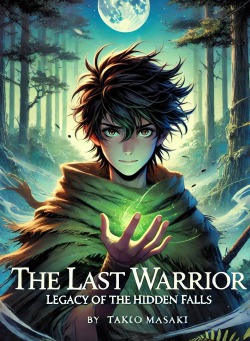
I'll start at the very top: the title. "The Last Warrior." My god. It’s like you set out to choose the most algorithmically invisible, SEO-hostile, hyper-generic word cluster this side of a Buzzfeed AI’s test run. It's a string of syllables so devoid of distinction that it might as well be the name of a fake Xbox game advertised in a Saturday morning cartoon. When I Google it, I get a cringe-core Disney movie about time-traveling Slavic knights. If Disney got there first, you’re already too late. You don’t get to reclaim a title they’ve already smothered in kid-friendly mediocrity. In the longform story world, especially with 100k+ word monstrosities like yours, discoverability is oxygen. You suffocated your baby with a name tag that screams, “Please skip me”, and many did in this website. That's the failure of the meta-context.

Your synopsis after that title is a stew of secondhand shōnen cliches boiled to a paste and slathered over nothing. I don't want to sugarcoat how generic it sounds. Every word reeks of something I’ve read a hundred times before in Wattpad trash piles or anime back-of-the-box blurbs. A forbidden scroll? A clan of fallen shinobi? A gifted underdog with a “mysterious legacy”? I’ve seen fanfiction summaries with more originality and at least some shame. And then—then!—you sandwich this with those chirpy, LLM-sounding, Goodreads-esque “this story is fast-paced fantasy about legacy, loyalty bla-bla-bla” sentences that do more damage than a poorly written synopsis. You might think it adds professionalism, but what it actually screams is: “I know this is derivative and I’m hoping you won’t notice if I sound friendly enough.” Spoiler: I noticed.

And because that paratext sets the expectations, it poisons the well. It lowers the reader's trust, and that distrust detonates the moment reader will hit the prologue. Which is, by itself, a standalone wreck. It’s like a cold open from a straight-to-DVD anime no one asked for: names we don’t know, powers we can’t grasp, and conflict we don’t care about—all written with the self-seriousness of a teenager cosplaying tragedy. You inserted a god-tier battlefield full of glowing chakra, family tension, and weather-based symbolism into the reader’s face and screamed “THIS IS EPIC,” and the reader (me), stunned and joyless, stares back thinking, “Who are these people and why is the sky green?” Prologues are meant to be promises. But a promise only works if it’s tied to a story readers understand. Your prologue sets up a future that has nothing to do with the synopsis, so that emotional investment you tried to extract? Bounced.

By the time Chapter 1 happens, the trust is already gone, due to context. The chapter itself is not awful. It’s serviceable. If you strip away all the pretentious scaffolding you built around it—the synopsis, the prologue, the death grip on every anime trope you could yank from TV Tropes—Chapter 1 is a modest, small-stakes opening about a kid trying to survive and accidentally stealing the plot device. That’s the problem. I had to willfully ignore everything you gave me to appreciate the chapter. I had to perform narrative alchemy, turning your garbage preamble into neutral context just to enjoy a duck murder and a scroll heist.

And then Chapter 2 just... exists. I'll say it straight, without metaphors: filler. That's because there's no urgency, no escalation, no consequences to justify the investment to further read the story. The pacing has all the dramatic tension of someone alphabetizing their trauma. Masao shows up to drop exposition like a government pamphlet, Aoki mutters passive-aggressive barbs, and the overhyped blank scroll is just there, unrolling its useless blank face and daring me to feel something. Basically, you tried to light a fuse and forgot to add the dynamite.

But if anything amplifies the damage, it’s your shallow, ornamental obsession with Japanese aesthetics. I’m not even going to mince words here: you are not immersing the reader, you are actively alienating them. You sprinkle untranslated Japanese like it’s narrative seasoning, expecting us to feel “immersed,” but all you’re doing is forcing your reader to mentally tab between story and glossary like they’re playing a bilingual version of Dark Souls. Good translators—you know, real ones—know that their job is to create a seamless flow between cultures. They don’t drop yancha and o-futari tomo in the middle of a scene and then pray the reader scrolls to the glossary to find out it means “mischievous” and “you two.” You have to choose: either make the language readable, or make it smooth enough in-context to not matter. You did neither. You just tossed in Japanese like a cosplayer who watched one too many AMVs and wanted to flex.

So far up to Chapter 2, you broke immersion every few paragraphs. That's an unofficial record for this thread. Even the most downright terrible stories in this thread didn't do that agressively. I'll say the truth: when immersion breaks, no amount of glossaries, worldbuilding, or duck-based moral dilemmas will save you. Don’t even get me started on the pacing problem—or rather, the complete absence of narrative gravity. You, as a storyteller, must know the difference between what a reader knows, what they need to know, and what they want to know. You overfill the first, you ignore the second, and you absolutely strangle the third. The result is confusion, disinterest, and finally: apathy. And apathy, dear author, is the reader’s middle finger in literary form.

So here it is. You built a house of story, but the blueprints lied, the foundation cracked, and every hallway leads to a scroll that says “TBD.” You seem to believe that presentation is enough—that as long as things look immersive and sound epic, the reader will follow, but readers don’t follow aesthetics. Sure, they can be lured by it, but at the end, they follow stakes. They follow character. They follow momentum. They follow the river, and when that river is blocked by narrative debris, they either go around or jump to another river that looks cleaner.

Next time, title smarter. Subvert something. Write a proper synopsis. Translate foreign culture like you respect the reader’s time. When the storyteller doesn't think about the reader's experience, what they experience before that text hits, you get this fuckin' thing. A world full of thought, but zero presentation.
 

JayMark

It's Not Easy Being Nobody, But Somebody Has To.
Joined
Jul 31, 2024
Messages
1,635
Points
128
Sorry, can't help myself.

The advice on using foreign words is very important. There is a time an a place when they add to a story and a time and place when they detract. The examples alone show use of foreign words easily translated into English. They break reader concentration for no good reason. Use words that provide a unique insight into a foreign cultural artifact, because it provides something new for the reader to learn and can be placed into context. Use words that are familiar to English language readers as well, your readers will understand what sushi is, or better yet you don't have to call onigiri 'jelly donuts'.
 

JoshA

New member
Joined
May 30, 2025
Messages
10
Points
3
Are you one of those brave souls who believe your manuscript is teetering on perfection but still wake up at 3 a.m. knowing deep down it’s a disaster? Good. You’re my favorite kind of writer. I’m here to roast your work—scorch it until the ashes look usable. Think of me as the Gordon Ramsay of prose, minus the condescension and fake praise. If your story’s dialogue sounds like two malfunctioning robots reciting a phrasebook, or your pacing moves like a snail overdosed on melatonin, I’ll say so. And you’ll thank me. (Eventually.)

I won’t pat your ego or whisper empty affirmations about how your “raw passion” is shining through. I’ll wield my critiques like a rusty spork and perform open-heart surgery on your prose—messy, necessary, and unforgettable. Don’t worry; you’ll survive. Growth always hurts. But so does realizing your novel reads like someone fell asleep on a keyboard.

If you think your manuscript is ready for tough love, I’ll give it to you straight—no sugar, no spoon. You’ll cry, sure, but you’ll also crawl out of the wreckage stronger. Because what doesn’t kill your manuscript will absolutely make it publishable.

Think you can handle it? Drop your link below. Let’s fix your words before they become tomorrow’s filler on this website.
Honestly I am new author so it might have some mistake here and there and I am planning on rewriting
 

foxes

Well-known member
Joined
Dec 17, 2020
Messages
188
Points
83
Last edited:

Tempokai

The Overworked One
Joined
Nov 16, 2021
Messages
1,392
Points
153
Will leave mine here.
I will wait patiently for my time to come.
Thank you in advance.

I read three chapters of your webnovel, and I genuinely regret it—because that was, without exaggeration, the most boring thing I’ve read in a long, long time. So boring, in fact, that four days ago I opened that link, read the synopsis, saw the first chapter, and went to play RimWorld for four consecutive evenings straight. And, that overdone to death three colonists falling to a rimworld setup I had done 10+ times was more interesting than this. The whole thing about this webnovel felt like a creative tapeworm, feeding off tropes that died years ago, while dragging itself through a plot so uneventful it could be legally classified as sedation.

Just look at the damn title: Become the Strongest with Gacha Skill. You may as well have called it Search Engine Bait: The Series. It's derivative in the way a knockoff is derivative of another knockoff, the kind of title that sounds like it came from a random CN generator built to exploit the shadiest corners of Faloo's algorithm. And, somehow the synopsis manages to be worse. It's so basic, that I can't call it basic, more like a x6 components under the water inside a lake, while it rains, while outdoors, deteriorating 8 durability a day. It just sits there, waterlogged and rusting, like a forgotten piece of material in a humid biome. You had aimed for the land, but you landed on obituary. There’s not even enough self-awareness to look a like a parody, no sense of awareness that it's so derivative that no one besides ultra bored dudes who don't have RimWorld in their work PC would read it. It’s not that the synopsis is playing it safe—I just can see that it’s too dull to even realize it’s supposed to be playing.

But what really fries my patience is this: even if you had some ideas buried in this story, you presented them in such an LLM-core fashion that they come off as pre-chewed nutrient paste. I read it, and I didn’t hear a voice—I heard The Butler. You know, the classic overly-helpful assistant who tells you things you never asked for in a tone that’s half job interview and half coma. This is what I call a systemic failure of storytelling, where everything, from the sentence construction to the pacing to the characterization, actively resists the reader's ability to enjoy the work. It's not laziness, because I can see the some kind of effort in the text. But it's misplaced. Like a 9-yo colonist kid who botched to make a bed and tried to convince everyone it’s a chair.

The most annoying part is that titular Gacha system—the one thing that might’ve saved this mess—doesn’t even exist by the end of Chapter 3. That’s like writing a story called How I Became a Vampire King and forgetting to put vampires in it. A “slow start” doesn’t work when the entire pitch is based around a gimmick. Readers come to webnovels with expectations. This isn’t your MFA workshop where you can pad the first 30,000 words with introspection and weather metaphors. People came for the Gacha. They came to see it break things. They came to see the MC roll something absurd, exploit it, and become interesting because of how they handled that absurdity. Instead, what they got was worldbuilding stew and a protagonist whose defining character trait is being worse than a pawn in RimWorld.

That leads me to immersion, or more specifically, the lack thereof. The synopsis misleads hard enough to doublecheck into laziness, the pacing flattens because of a synopsis failure, and the MC named Ray might as well be named Beige Wallpaper. You don’t open with worldbuilding in a webnovel unless the character is the world. You go character first, action second, world third. It’s not just convention I preach—it’s the only structure that lets readers care long enough to push through the opening chapters. And what did you do? You gave me a world map, a glossary, and a training montage with no stakes, all before I knew what Ray wanted, feared, or dreamed of. That’s sure as hell is not a slow burn.

Ray actually could have been interesting. He has enough backstory for a separate novel, and honestly, the “no skill, just grit” angle would’ve worked better without the Gacha gimmick being bolted on like some marketing intern screamed “Put lootboxes in it!” at the last minute. The Gacha element doesn’t feel integrated. It feels like a shell, slapped on top of a story that was already finished, and that shell shattered the second I started asking, “Wait, where is this Gacha system?”

Now, let’s talk prose. You’re half-human and half-The Butler. It’s painfully obvious. Every third sentence is trying to audition for a quote-of-the-day calendar. You drop tricolons like they're seasoning, unaware that they only work when the rhythm of the sentence needs that escalation, like I do in these roasts. I saw em-dashes thrown in like someone discovered them yesterday and decided every thought needed a dramatic interruption. That kind of a em-dashing only works when that information is 100% is needed right here, right now, but you have all the damn time in storytelling, so why you use them at all? And at last, the metaphors. My god, the metaphors. They’re not evocative, they’re in the group called cringe cosplay. It’s like you’ve heard good writers use metaphors to deepen meaning and thought, and you went, “Ah, yes—time to compare sadness to stale coffee and hope no one notices I’m stalling.”

Let me be clear: rhetorical techniques aren’t bad. When used right, they elevate a narrator’s voice, especially in first-person or limited third. But that only works when the narrator is the character. You’re writing in omniscient or distant third, and yet you’re trying to inject rhetorical gravitas into the narrator’s voice like it’s supposed to carry the story. It doesn’t. It feels fake, hollow, emotionally manipulative in a way that isn’t even charming. In storytelling, persuasion doesn’t come from sounding persuasive—it comes from sounding real. And what you’ve written doesn’t feel like a story is happening—it feels like someone giving a TED Talk about a story that might one day happen.

You tried to fake immersion with narratorial weight, but here’s the thing—you’re not Cicero delivering Pro Milone. Sure, he might fumbled that IRL, like you did with this webnovel, but his written version was top notch enough for people to remember it for two thousand damn years. You’re a webnovel writer trying to hook a dopamine-deprived reader before they click to the next tab. The second your prose loses credibility, be it a bad idea, bad execution, or bad characterization, you’ve lost them. And, you've lost your credibility at the synopsis, when I went to play RimWorld instead of writing this long ass monologue. You clearly don’t understand consequences your storytelling tools yet. You're using advanced rhetorical gear like a kid swinging Excalibur and missing the target. These are tools of nuance, not blunt force. But every time I read a line that’s trying to be poignant, it lands with the grace of a cat hitting a windowpane.

For me, this is a case study in misplaced intent. You’re chasing the tone of high-brow prose while trapped in the skeleton of low-stakes genre fiction, and instead of resolving that conflict, you’ve leaned into both until neither works. You’ve got the soul of a bootleg light novel buried in the coat of literary ambition, and the result is a creative corpse that can’t decide if it wants to impress a professor or bait algorithmic engagement.

You want to do better? Then strip the nonsense. Pick one tone. Look at JP and KR storytelling about modern era dungeons, and compare their sentencing rules with yours. Show me a protagonist who wants something. Deliver the damn Gacha skill in chapter two at max. Give me action that has real consequence. Cut the decorative language unless it flows through the character’s voice. And for the love of all that is sacred in Dao of Storytelling: remember that readers don’t keep reading because the writing is smart. They keep reading because it’s alive. Right now, yours isn’t, chief. Do better.
 

Tempokai

The Overworked One
Joined
Nov 16, 2021
Messages
1,392
Points
153
Hello fearless reviewers, :sneaky:

I'd like to submit my novel for your consideration. It follows a transmigrated lawyer navigating a world of magic and mysterious paths.
Master of All Paths: A Transmigrator’s Ascent
Lay it on me! Thanks for taking a look. :cool::geek:

I read your first three chapters, and here's the my verdict: they're fine. That's it. I cannot say that it's brilliant and it's surely is not offensive. Just... fine. Perfectly serviceable prose, dialogue that mostly lands, and characters who don’t immediately make me want to eat drywall. But, the reason this "fine" becomes a flaming wreck isn't the content itself—it's because you, the author, sabotaged your own story before it even began.

I'll start with the chapters, then I'll go to that synopsis.

Chapter One is blatant slice of life fluff. It opens on a mountaintop village with a kid looking into the sunset like he’s waiting for something interesting to happen. Spoiler: nothing interesting happens. You do that thing every amateur storyteller does when they’re afraid of commitment—you coast. There was no conflict to feel, no stakes to agree with, no inciting incident to start snowball rolling in. Just... vibes. Pure, "I read a lot of fantasy books that start like that" vibes. Kenneth Burke, the rhetorical granddaddy of storytelling, said storytelling is "a form of human action, where individuals and their interactions are akin to actors in a drama." And what is drama if not conflict plus stakes? But no, you wrote a scene so low on drama, it makes a thunderstorm weather report that sure as hell would be wrong tomorrow sound riveting.

Nothing’s at risk. Alph, your MC, isn't losing anything. He’s not fighting for anything. He’s just… there. Sitting under a tree, absorbing memories from his other self like a passive USB port. Even your so-called “friends” show up just to do the classic RPG “welcome to the village” dance. All I see is a tutorial level in that 3$ game made with RPGMaker with the enemies turned off. You chose to start this story on some random snow-covered Tuesday instead of the day where anything happened. Transmigration? Skipped. The fabled Awakening Ceremony? Not yet. Just some guy, in a village, sitting. You know what’s worse than a cliché? A delayed cliché.

Chapter Two? Congratulations, you made the RoyalRoad “info-lump” special. It's not just an infodump—it's an infodump wrapped in oatmeal and served cold with a side of exposition jam. The problem isn't that you're telling me things, it's how you're telling me things. You picked books and slice-of-life chats as your delivery system. That's like trying to sell me on a high-stakes spy thriller by showing me a PowerPoint on Tolkien history. Again, no urgency or tension to speak of. When the narrator drops some book's information like it was some kind of flavor text from Dwarf Fortress, you've lost me.

Cognitive Load Theory should’ve been your friend here, but instead you treated it like a party guest you locked in the basement. The reader’s working memory is small. They can't hold seven professions, three local traditions, two bloodlines, and a magical ecosystem all at once. Chunk the damn information. Spread it out. Make it relevant, or give it away only when it's relevant according to the context of the scene. Tie it to a scene where something happens. Instead, you just shove it in my face like a some kind glossary with a heartbeat. We both know it’s an infodump—you knew it when you wrote it—and that makes it lazy.

Chapter Three is where I gave up pretending to care. You tease danger with poachers, but they’re offscreen. You introduce a real-world skill moment when Alph rewraps an ankle, but it leads nowhere. You nod to progression by name-dropping “tiers,” but you don’t show any of it. It’s still just kids in a village, swapping small talk and sipping warm berry juice like they’re in a medieval sitcom. The problem isn’t your prose—it’s your cowardice. You keep telling me there’s a bigger world out there, more danger, more magic, but you don’t bring any of it onstage. You’re writing like it's what needed to be chunked and baited like it was a carrot on a stick, hoping I’ll wait patiently for the good stuff. I won’t.

And all of that—all of it—is rooted in your utter failure to manage reader expectation through the synopsis. That’s the real villain of this story. That’s the reason I walked into a bookstore expecting Mistborn and left with Little House on the Frostbitten Prairie. You promised a progression fantasy. You said there’d be identity drama, horizontal growth, big-picture mechanics. Instead, I get 7,000 words of nothingburger that I would've probably praised somewhere else if it was properly advetised.

That synopsis is narratively fraudulent. Period. And don’t even get me started on the “Formerly known as” line. Nothing screams "I don’t know what I’m doing" louder than publicly announcing your title rebrand like it’s a washed-up YouTube channel. That line doesn’t build credibility, it torpedoes it into Mariana Trench. It reminds readers you once thought “Master of All Paths: A Transmigrator’s Ascent” was a good idea. It's not. It reads like you dumped every trending keyword into a blender and hit “Grind.” If you're going to change your story's face, do it without announcing it happened. Quietly, like a professional, and surely not like a man renaming his fantasy OC in real time.

The most ironic part of all this for me is this: you technically can write. Your prose is competent enough for RR. Your dialogue isn’t cringeworthy, yet. Your setting is modest but atmospheric. This isn’t some unfixable disaster written by a guy pounding keys with his forehead. It’s worse. It’s a story that could’ve worked, but you kneecapped it with your own indecision and lack of genre understanding.

This is what happens when you try to make “cozy” and “progression” hold hands without deciding who’s driving. Slice of life can be dramatic. It can be high-stakes. It can be compelling. But not if your protagonist is a decorative lampshade waiting for someone else to light the room, and not when you frame the story as something it clearly isn’t—yet.

Fix the synopsis. Sell the story you actually wrote. Stop baiting readers with systems and stakes you have no intention of showing in the first 10k words. Pick a better starting point. “Transmigration Day” or “Awakening Day”—I don’t care. Just start the damn plot. Cut the exposition dump. Drizzle that info over actual events. Let your world-building come from the world, not the bookshelf. Delete the "Formerly known as" line. Bury that shame where it belongs. You don’t need to rewrite the whole story. You just need to grow a spine, pick a genre lane, and tell the story you clearly want to tell—without baiting readers into expecting something else.

All I can say, while creation is divine, how you frame that creation rhetorically is ultimately leads to its survival. You've failed to write the progression fantasy because of that.
 

TimelessOne

New member
Joined
Aug 22, 2025
Messages
1
Points
1
Hello!

I'm new to writing and I want to say that you giving this much feedback is really appreciated by new writers like me.

This is my work in progress.

There are only three chapters out so I think you'll have no problem reading it in your free time.
Thanks!
 
Top