Tempokai
The Overworked One
- Joined
- Nov 16, 2021
- Messages
- 1,392
- Points
- 153
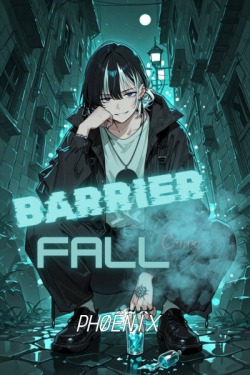
I read three chapters, and I can confirm the prophecy: I got exactly what I expected, which was a whole damn nothing—three servings of narrative air-frying, lightly seasoned with "please clap" moralizing and the kind of average Californian ideological talking points you usually have to endure while clicking "I acknowledge" on an HR training slideshow probably called something like "Respect In The Workplace: Don’t Be A Cartoon Villain, Please." I came in looking for a webnovel that promised "girls’ love" and "three girls versus a killer," and instead I got a prologue that preens, a first chapter that catalogs, and a second chapter that lectures, all while the actual story—the one your synopsis swore you were telling—waits outside in the rain like a date you forgot you scheduled.
And look, I could’ve ignored the mumbo jumbo in those chapters and write something about "bad pacing". Readers like me, who read too much ignore a lot. Readers who just want to be entertained ignore typos, contrivance, awkward metaphors, and the occasional sentence that dies halfway through like it remembered it left the oven on. Hell, readers even ignore preaching when it’s background radiation if the story interesting, when it’s part of the wallpaper and not the damn foundation. The problem here is that the preaching isn’t decorative; it’s load-bearing. Your opening chapters are built like a house where the support beams are made of "here’s how I feel about society," and the moment a reader leans on it for entertainment, the whole structure groans and starts flaking into opinion dust.
I always say, first impressions matter. It matters because webnovels are a street fight for attention, not a gentle seminar where everyone politely waits for your third-act brilliance that isn't brilliant but everyone says to not hurt the "vibes". You don’t get to stroll in late, lay your manifesto on the table, and assume the audience will stay seated until you decide to begin the plot you advertised. The first chapter isn’t a warm-up lap; it’s the bouncer deciding whether you get into the club. Your opening, unfortunately, hands the bouncer a laminated card that reads: "I have feelings and grievances and I am going to process them at you before I tell you any story," and the bouncer—who is the average reader—goes right back to doomscrolling and reading yet another GL fox girl isekai #241 simply because it exists.
The core issue, the rancid little engine behind the whole mess, is persuasive power. Or, more accurately, the absence of it. The story doesn’t persuade me to care about the characters, the setting, the stakes, or the horror premise; it assumes I’ll care because you care. That’s adorable, like a toddler handing me a wet rock and insisting it’s a treasure, except the toddler is armed with paragraph-long generalizations about power dynamics and the wet rock is your pacing.
So, let’s talk about the implied author, since your opening practically drags them onstage under a spotlight and makes them do jazz hands. Wayne Booth’s idea is simple enough: every text creates an "implied author," the ethical chooser behind the narratorial voice, the presence the reader reconstructs from what the story values, emphasizes, condemns, and excuses. The implied author is supposed to be a ghost, not a roommate whose snoring you can hear above your bunkbed. Here, the implied author has moved in, eaten my cereal, and is pacing the living room explaining what’s wrong with society while the actual cast of characters stands politely in the corner like mannequins waiting for a scene that never arrives.
There’s a thick, syrupy "I’m writing this novel straight from my life experiences" vibe pulsing through these chapters, and by itself that isn’t a crime. Plenty of good fiction is fed by lived experience, bitterness, loneliness, rage, the feeling of being misunderstood, the itch to be seen. The difference is that good fiction metabolizes that into drama. It makes characters specific. It makes the setting do something. It makes the pain generate choices that collide with consequences. But instead, your opening chapters doesn’t metabolize; it regurgitates into generic mush of "everything I hate is bad". The text keeps stepping forward to tell me what it thinks, and it does so before it has earned the right to be heard.
Chapter 0 tries to be stylish menace: mold, stench, a creature called The Wolf, banter with a woman who talks like she’s auditioning for "charming sociopath #3," and then a girl in the corner gets called a "toy" like the story is testing how edgy it can be without having to make the reader feel anything. The scene wants me to be intrigued, but it gives me no reason beyond aesthetic posing. It’s the narrative equivalent of a gal revving her engine at a red light and expecting applause instead of a warning from a police officer. This damn prologue isn’t a hook; it’s a mood board with dialogue bubbles you need to agree is "cool" before you can progress. You can do villain prologues when they sharpen the blade that will later cut the protagonists, but your Wolf doesn’t loom over the story yet—he lounges, he flirts, he waits for the plot like the reader does.
Then Chapter 1 yanks the steering wheel into a classroom full of named classmates, each introduced like you’re taking roll call at a school where the primary curriculum is "how to exhaust a reader’s working memory." It’s not that names are evil; it’s that names without narrative function are just noise. You stack up Ingrid and Katie and Winslow and Rosario and Sunshine and Pascal and Aesop and Muhammad and Henry and Michael and Olivia and Elijah and Xaiden and Lucia, and it reads less like a lived-in classroom and more like performative inclusion sprinkled on top like stale confetti. It invites the reader to start guessing what you’re trying to signal rather than what you’re trying to tell, and the moment I’m doing ideological detective work, I’m not inside the fiction anymore.
And then Chapter 2, mercifully, stops pretending it’s a story for a few paragraphs and just becomes a sermon. We get broad, generic examples of exploitation—bosses, doctors, rich people, insecure women near forty—paraded out like a slideshow of grievances that would be right at home in a social media thread titled "things that prove the world is rotten," except you’ve put it in a narrative slot where action is supposed to occur. Fiction can absolutely deal with systemic cruelty, with abuse, with the petty sadism of authority. The difference is that fiction does it through events that make meaning, not through a list of examples that tries to pre-chew the theme and spoon-feed it to me while I’m still trying to figure out why the teacher has anime-villain energy and apparently enough grip strength to lift two students by the collar like she’s training for a forklift certification.
Meanwhile the synopsis sits there, smug and useless, claiming "GL novel about three girls vs a killer," while the opening delivers a useless prologue, a cliché first chapter, and a meaningless second chapter that still hasn’t bothered to start the thing it promised. The pieces don’t add up into a compelling case; they stack like mismatched furniture in a rented apartment. You can call it "slow paced," sure, in the same way you can call a traffic jam "a scenic route," except your pacing makes slow look like a snail crawling upstream with a headwind and a tiny union-mandated lunch break. Nothing moves because the author’s pathos must be aired out first, like emotional laundry hung across the doorway so the reader can’t enter without getting slapped in the face by damp sincerity.
If I were your editor, I’d have said "scrap this opening" without even warming up my red pen, because it doesn’t move the story and it doesn’t persuade the reader to stay. Even if you insisted on keeping the same ingredients—alienated girl, unfair teacher, ominous killer, friendship under stress—you still couldn’t salvage this arrangement, because the arrangement is the problem. You need to reduce yourself to make the story happen. You need to stop speaking over your own characters like you’re afraid they’ll misrepresent you. You need to trust the reader to infer, to wonder, to be unsettled, to care because the world is moving and the stakes are tightening, not because you told them society is bad and authority is cruel and everyone’s a freak.
Right now, the implied author isn’t a guiding intelligence behind the curtain; it’s a person standing in front of the stage, blocking the actors, explaining the play before it starts, then looking offended when the audience leaves.




 ) I'm now humbly requesting for another roast on the grill before I get too far ahead of myself