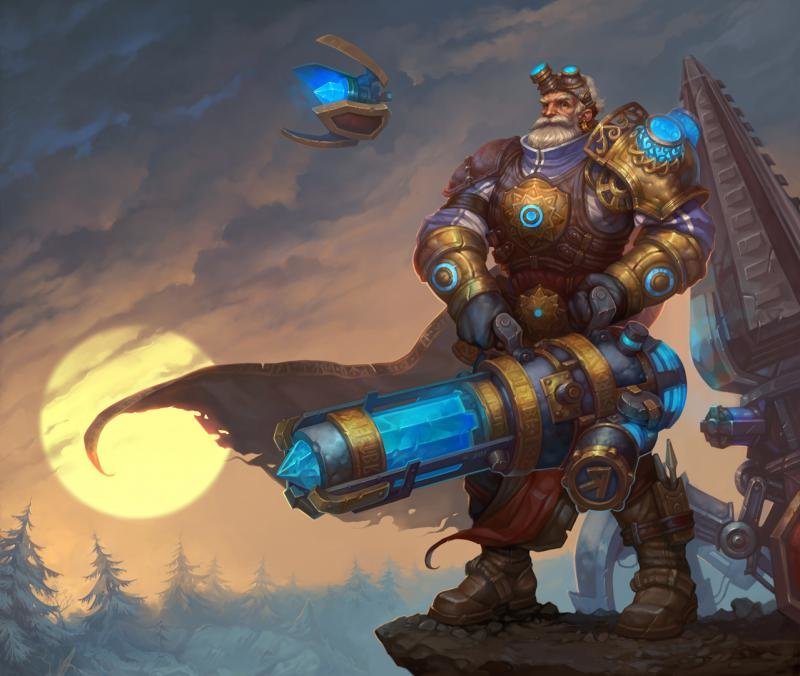
AUGMENTATION: The Death of Magic.
Mongo walked into the bar. Everyone else cleared out. Everyone knew who Mongo was and wanted no part of it. Bounty hunter for hire. Specialized in thauma-positives and Delta-actives. Mongo had augmented the every living crap out of his body. In a literal sense because he had replaced his entire digestive tract. He loved walking around with his Dimensional Normalizer/Delta Wave Nullifier. Magic and psionics failed around this guy, but his augments more then made up for that. Mongo’s servos made a whirring sound as he clumped his way across the bar to the only occupant who had not fled. The dark robed figure in the corner sat still, making no indication he even noticed the approaching mass of flesh and mental instability.
Mongo’s voice crackled, a side effect of having it enhanced to project a sonic blast, “Smart move. Not much point in running, and you are only worth slightly more alive then d-d-d-d-d-d-d-d-d-d-“
He never got a chance to finish.
As his head rolled to a stop, his construct eyes began furiously focusing and searching, trying to gather some tiny bit of information that would explain his sudden change in perspective and why he was looking up at everything. They settled on the long boneblade that stuck out from beneath black robes. A slithering voice said calmly, “Call me Speed.” A soft ‘snickt’ sound echoed in the empty room as the weapon retracted, “Because Speed kills.” A rubbery tentacle lashed forward and snatched the head while powerful arms grabbed Mongo’s still twitching corpse, “And Speed has expensive tastes.” The sound of metal and flesh being dragged along the stone floor filled the bar, dwindling as he made his way out the back, “I wonder what we can get for your parts down in The Shade.”
Dungeons and dragons is a curious game.
If you look at it closely and follow it to it’s logical conclusions, the world should accelerate out of control. Take the humble wall of salt spell. It should revolutionize food preservation. The Teleport circle spell makes it possible for entire armies to invade just about anywhere is a matter of minutes. The transportation costs are nothing compared to the cost of a permanent teleport circle. If one allows beneficial spell traps, an entire city can have it’s medical needs and food desires taken care of for effectively no upkeep. Garments woven out of illusion and fabric created from nothing become the norm. Yes, magic taken to its logical conclusion can only make the world a paradise without scarcity or want.
If only it was that simple.
This supplement is about what happens after that point. This entire book is based on two simple questions, “How much magic is too much magic?” and “What happens afterwards?” First we will answer how much is too much, then we will get to the results.
How much magic is too much?
To answer the question, first we must answer how magic works. D&D leaves the details up in the air so individual DMs can make their own choices. Once you select a given viewpoint, it limits your options. However,
Augmentation: the Death of Magic requires that we define how magic works before we can understand what happens if we have too much. To that end, we posit the following paradigm.
The multiverse exists as a huge wheel. Individual prime material planes may have unusual configurations, but the over all cosmology seems to follow a regular pattern. What’s consistent is the existence of the positive and negative material planes. The ebb and flow of energy through out the cosmos seems to begin at one pole and flow to the other. Either directly, or indirectly, the flow of magic is tied to these two poles.
They are attracted to each other. One flows to the other and they interact. This interaction is manipulated by those who use magic and it’s flow it altered. A spell cast, a magic item created, a magical creature that takes flight, these all require the flow of magical energy through the plane they occupy. This flow can be interrupted. Anti-magic fields and dead magic zones are examples of this magical flow being redirected and a zone of null-magic being created. It doesn’t completely destroy all magic. Extraordinary abilities still function, mind you. But the concept is sound.
Two principals govern this paradigm of magic, Opposites attract and like repels. The flow of positive to negative energy happens because they are attracted to one another. They flow towards one another and it this interaction that allows magic to manifest to various degrees. Of course there are alternative sources of power. The elemental planes, the outer planes, divine power, and so on and so on. However, they all come back to the ebb and flow of positive to negative.
So what happens when you start to build a post-scarcity society? Where 9th level spells are common place and people don’t walk from city to city, but teleport at a whim? Where food is created out of magic itself and there simply is no longer an economy of a typical sort. When flying cities are easy to make, magic tends to build up. This accumulation of magical energy, be it negative or positive, starts to exert a repulsive force. The same happens if you have too much negative energy. Let us look at the three scenarios.
Too Much Positive Energy
When you have too many good aligned gods or too many wizards building too many impressive magical artifacts, you start to get a build up of positive energy. Now the scale of a normal campaign world is usually well below the limit. Even one 17th level wizard casting every spell he knows every day is not enough to cause an imbalance. (Although, in some very delicate prime material planes, this could be the case.) No, it’s about the point where flying cities and gates/teleport circles become the normal way of life for everyday citizens to commute to work that it gets out of hand.
When this happens, it takes more and more effort for positive energy to work it’s way into the plane. The flow becomes repelled and you get less and less people born with the ability to work magic. Naturally occurring magical animals start to become scarce in the wild. You don’t get large scale dead magic zones at this point, but they so start to appear here or there on a small scale.
Of course, the high concentration of positive energy attracts negative material energy. This usually starts to manifest with a higher number of spontaneous undead creation. People who die without proper burial have a tendency to get back up. As the imbalance gets worse, even a proper burial will not stop it and spells must be cast to keep the dead from reanimating. Necromantic creatures start to manifest in the wilds and areas with large number of dead animal bodies have a tendency to spontaneously generate undead that wander off with murderous intent. Note, the manifesting undead are not controlled, nor are they driven by a need to destroy positive energy. They are a symptom of a greater problem. Sometimes the rise of undead is enough to destroy a magical empire and the situation rights itself, but this is not by design.
Too Much Negative Energy
Sometimes evil wins. Negative energy is just as useful as positive energy and can do many of the same tasks. Who needs food when everyone is undead? Who needs a flying city when you make your city out of bones and the whole thing walks around? A negative energy imbalance often results from large numbers of undead, The most common sign is when empires start to employ a large scale skeletal work force.
This is often the sign of an out of balance society. When every bone is seen as something to animate and put to work, negative energy is being used far too much. Doors made of skeletons that open when you approach. Carts that have bone horses, or have bone axles that don’t need to be pulled. Furniture made from bones that walk around to where you want it, or conform to your body shape for maximum comfort. On a small scale, this isn’t a problem. On a large scale, bone fed into animate dead spell traps becoming the backbone of society’s work force is a problem. Cheap, eternal labor at no cost other then the resetting animate dead spell trap is a trap of another sort all together.
Of course this leads to the problem of too much negative energy. Like positive energy, negative energy starts to avoid the plane in question. Undead no longer spontaneously form. Undead start to de-animate without warning, suddenly crumbling to dust. It starts on the lower forms of undead first. Mindless undead are those most prone to de-animation. But higher forms of undead, the intelligent ones, they start to suffer as well. An increased hunger for life force by whatever means they consume it. Ignore the hunger for too long, you start to disintegrate.
Of course this attracts more positive energy. The sun may burn a little bit brighter. Some days, the undead might find that indirect sunlight is enough to harm them. Undead normally immune to sunlight might find themselves smoldering should they find themselves in direct sunlight. Furthermore, more and more spontaneous spell casters will appear. Sorcerers and favored souls will be the most common form of this "outbreak".
Wildlife will become more fierce. The wilds that remain that have not been ravaged by the undead will become savage and fierce. Creatures may develop the ability to channel cure light wounds and other spontaneous spell-like abilities. Note, they won’t have a built in hatred of undead or negative energy, but they could provide a destabilizing force.
The Gods Respond
Often at this stage, the gods will step in and take action. If the do not, then usually Gods from nearby prime material planes will take note of the growing imbalance and “drop a dime”, warning them about the problem. The steps gods will take at this point vary, but can range from “tree-hugging eco-babble” to “destroy the offending empire.” However, occasionally, either the gods are unable, unwilling, or not present to correct the imbalance. When this happens, it can advance to the next stage.
Too Much Magic
The exact point is left up to the DM, but it will happen sooner or later in any plane under the above conditions, if things are allowed to stay out of balance for too long. How the imbalance happens varies.
- Perhaps a holy god of good creates a world of peace and harmony by completely destroying all things “evil” and anything undead. All negative energy is driven from the plane. With all the negative energy gone, there is nothing to attract more positive energy
- Perhaps the undead completely swarm the planet, murdering all life except for the holding pens where they keep human slaves. The sun itself has been destroyed or a giant shield is in place preventing the light from reaching the planet. With all the positive energy gone, there is nothing to attract more negative energy.
- Perhaps the inhabitants have struck some sort of bargain, where positive energy and negative energy users have a form of stalemate. Kindly wizards floating above the clouds in cities of gold without want or need. Below the rolling black clouds, a hellscape of eternal darkness where necromancers dwell and research eldritch lore in cyclopean tombs. With the plane swollen with both positive and negative energy, both forms of energy are diverted away, flowing around the offending plane and no longer through it.
This is the point where a universe reaches a tipping point. The plane has reached the upward boundaries of what magic can tolerate. Abused to the breaking point, magic starts to fail. The first sign of the approaching magical drought is the appearance of dead magic zones. Every plane has them, but now they start appearing spontaneously, usually in out of the way areas.
Magic has a tendency to accumulate in areas such as cities, simply because these are where the spellcasters live. These act as “knots” in the flow of magic. The “tears” in the fabric of the world usually occur at the mid-point between large concentrations of magic. Think of it like the tide going out. Cities tend to be at the “lowest” point. Locations that lack large concentrations of magic will be a “high” point, and the first to be exposed as the "water" runs out. Of course, this makes it harder to detect the problem. A few out of the way dead magic zones are hardly worth noticing, but it’s only the beginning.
If drastic actions are taken at this point, the damage can be reversed. Basically you need to start chucking every bit of magic you can find into a sphere of annihilation. Better still, you need to contact the god of magic and sacrifice every bit of magic on the planet to him/her/it in hopes he has enough energy to fix the fabric of reality before it’s too late. Chances are that if it’s gotten this bad, nobody is suddenly going to have a change of heart. The gods have either caused the problem, or failed in their duty.
Usually at this point the neighbors take notice. Left unattended, the problem will get BAD. Then like rats fleeing a sinking ship, anyone with any levels will leave the dying plane and seek shelter elsewhere, bringing with them the very attitudes that caused the problem in the first place. If you can’t keep your own plane sanitary, let me assure you, nobody else wants you.
A number of pantheons through out the multiverse keep an eye on these sorts of things. Usually they will give a friendly heads up to whatever gods rule in a plane heading down hill, then a stern warning, then perhaps some rather dire threats. At some point, the gods take a more drastic approach leaving them two options:
- They can disrupt the harmonics of the entire plane.
- They can kill all magic in the target plane.
Changing the plane’s harmonics.
Usually this is done with planes that still have active gods. The pantheon alliance is made up a wide number of gods or all faiths and alignments. Needless to say, they don’t agree on anything. Getting them to work together is next to impossible, and invading a plane with entrenched gods ruling there is an iffy proposition. Furthermore, agreeing who gets control of the plane afterwards never works. So the solution of choice of the pantheon alliance is simple containment, rather than overt force.
The offending plane is given a solid divine “whack”, sort of like using a putter on a golf ball. This has two effects. One, it starts the plane moving through the astral plane and “out of the way”. This helps to clear up any issues with the flow of magical energy to any of its neighbors. Two, it causes the universe to start “vibrating”. This has the immediate effect of severing every gate and extra-dimensional connection. It also makes plane shift impossible, because every known “vibration” is now scrambled. Anyone trying to gate out from inside is going to fail, for a while at any rate. A while being anywhere from a decade to a millennia. A few centuries is usually par for the course.
It is believed that usually when a plane has passed the tipping point it’s doomed. So all the gods need to do it move it out of the way of the normal flow of magic and let it implode. While this process does not harm anyone directly inside the target plane, those who rely on extra-dimensional movement for resources, transport, summoning slaves, that sort of thing, pretty much notice right away. While the “whack” doesn’t directly accelerate the continuing loss of magic, it certainly causes the inhabitants to panic. How do most inhabitants of a magic rich universe normally solve a problem? You guessed it, with MAGIC. Using magic to fix the problem is like trying to put out a house fire with lighter fluid. Typically, within a matter of years dead magic zones will cover 99% of the planet.
Kill all magic
If there are no gods left alive in the offending plane, the pantheon alliance usually uses a more direct approach. Dimensional compression. This usually involves getting something with a bit of weight to it, a demi-plane will do, and smacking it into the offending plane. The alliance usually keeps a few demi-planes drifting about the astral plane just for this purpose. Said plane is given a shove on a cosmic level to get the ball rolling. The goal is to give is a good amount of momentum. A few more adjustments to make sure it safely makes it through the astral plane without hitting anything else by accident, and usually it's lined up to ram the offending plane in a time frame from weeks to years, depending on how "crowded" the neighborhood is, and if there is a suitable plane nearby. In a pinch, any plane will do, but the effects of impact apply to both planes equally, so usually the gods avoid "punishing" innocent planes, except in dire circumstances.
The impact has no direct effect on the inhabitants of the plane itself. Lined up correctly, it will hit at a perfect ninety degrees to the axis of magic and both planes will compress, losing a dimension in the process. There is no massive explosion or release of energy. The universe just loses a dimension for a while. Imagine that you could take a cube and turn it into a flat piece of paper. That’s what happens to both universes, except the goal is to compress the target universe's dimension of magic.
The result is the entire target plane becomes a dead magic zone. Extraordinary abilities still function, but spells, spell-like, and supernatural abilities all fail. Artifacts continue to function, since they contain their own “internal” dimension of magic, but any mundane magic created by mortals fails. Even epic magic fails, unless it is powered by an artifact.
The result is a “cooling off” period of a few centuries. The thought is that the plane in question will “settle down” and when the plane naturally returns to it’s natural shape, it won’t have as big of a snarl and magic will flow naturally again. This is much more sudden and immediate then the first method.
Ignore the problem
There is a third option of course, which is ignore the problem. The multiverse is huge and the gods can’t watch everything. Sometimes a plane is fragile and it doesn’t take nearly as much magic to break it as other planes. Some planes can take a whole lot of abuse, but when it snaps, it goes down hill FAST. For whatever reason, the pantheon alliance either can't come to an agreement, or they just plain miss the problem. When this happens, the problem goes unchecked. Usually this results in the inhabitants becoming much more aggressive about finding magic. Once they begin to notice the huge rents in the fabric of reality and the resulting dead magic zones, they might decide to do something about it.
Run Away
This is a common response. Simply get up and go. Take whatever it is you really like about your home plane and leave. You got a flying city? Fly it to another universe where there isn’t as much hassle. The problem is that you aren’t fixing the problem. Furthermore, you are likely to just repeat the process all over again, especially if you didn’t learn why the dead magic problem was occurring in the first place.
Also, Gods of other planes don’t like interlopers. Flying your city into some other plane, especially when you are arrogant enough to tool around the cosmos in a flying city, usually offends the locals. This can end violently if you are too prideful. Humbling yourself before the local gods might work, but typically they’ll want you to dismantle your city. This doesn’t go over very well. No, the best way to run away from the problem is to just slip away as a lone spell caster. Set up a small magical base somewhere in the multiverse and just get back to whatever it is that you do to keep yourself amused. This is by far the most common outcome.
Fight It
Pride cometh before the fall, and sometimes people just don’t know when to quit. This is usually the point where the REALLY BIG magical devices come out. For example, that giant glowing thing in the sky. I think people call it “the Sun”. That thing seems to be just chock full of energy. I bet THAT could keep my unseen servant running for a while.
Such methods of “cannibalizing” energy sources of your home plane rarely work in the long run. They often wind up accelerating the process. The setting of Dark Sun is a perfect example of what happens when the process of cannibalizing magic goes too far. Far worse is what happens when someone figures out the real problem. If they decide they like where they live and they aren’t going anywhere, then it comes down to getting magic from SOMEWHERE. That usually involves raiding other dimensions.
Imagine your world is a typical D&D setting. Then a giant flying city appears overhead. Next thing you know, every living thing for a thousand miles is dead and their life force converted into magical energy, stored in the flying city's batteries. Flying constructs go out to collect all the bones. The bones make excellent raw materials, don’t you know. All useful raw materials simply teleport into holding tanks for processing before it plane shifts away. That is the sort of thing that could happen when a high magic plane starts to get desperate. This is exactly the sort of reason the pantheon alliance exists and can put aside their personal problems to work together. Nobody wants flying energy raping cities bobbing around the multiverse. That sort of thing needs to get nipped in the bud.
AUGMENTATION
So what does all this have to do with augmentation? Augmentation is the enhancement of the physical body in a fashion that typically is an extraordinary ability. In other words, if you were trapped in a world of dying magic, yet you wanted magic, you’re going to need to figure out a way to get magic to work in dead magic zones. Augmentation is a form of self-cannibalism. In a world of dwindling magic, you need to get magic how you can, where you can.
Making magic items
In D&D making a magic item is rather simple, you get the right spells, you get some gold, you get some experience points, you spend some time, bam. Magic item. In order for the Augmentation genre to work, you need to change that perception a little bit. In the augmentation genre, resources are a bit harder to come by. You can’t just spend gold and get the raw materials you need. Raw materials are hard to come by. Either due to the lack of magical energy, or because the world has already been strip-mined of all available resources, suitable materials for crafting is uncommon in a plane with dwindling magical energy.
Why Magic Items Cost What They Do:
At some point in the augmentation genre, a single question was asked, “I wonder what a single unit of magic is?”
This researcher looked into it and started to try and divide magic into smaller and smaller chunks until you couldn’t divide it anymore. So after some research he came up with what turned out to be, The Gold Piece. A single unit of magic. Turns out you can directly melt down gold for magic or do the same thing with most "valuable" materials. He did a bit more work and figured out what an experience point was. He hired some people to "adventure" and measured them over the years, took samples, then used XP transferring spells, Eventually the XP was discovered.
Well, gosh darn it if the guy didn't want to publish his life's work.
Suddenly wizards, clerics, everyone really, was figuring out EXACTLY how much it took to make a given potion, or a +2 sword. Shortly afterwards, some other wizards worked off of those calculations and discovered what a +1 actually was. Defining magic as to it’s limits and increments made things a whole easier to figure out. After a few short years this info trickled down to the merchants who learned how much they were being ripped off.
I paid HOW MUCH for a plus +1 dagger and it only cost WHAT???
Well, being a free market people started taking business elsewhere. Low level apprentices started under cutting higher level wizards. Suddenly there was a rebound. For a short few years there, you could actually buy some magic items for less then the cost to create them. Well, that didn't last long. I might be a holy crusader and you might be an evil necromancer, but we each got bills to pay. And so an informal "agreement" was made. It was never written down, it was never made into a treaty or anything so formal. There was no single date that this took place that you point to on a calendar. It just sort of... happened.
Magic items are made for X GP and X/25 XP and sold for 2X GP. Originally it was a compromise that just was "common" sense. Then it became tradition. After a while, it just became THE WAY THINGS ARE DONE. Occasionally you got someone who gouged the prices or someone who flooded the market with cheap magic items, but that didn’t happen very often, because gold itself is magic. In a magical world, the value of gold is not based on rarity, but on the actual usefulness of the material itself.
If you flood the market with a million gold pieces in the real world, inflation goes crazy. If you flood the market in the fantasy world, a great deal of the gold becomes stock piled in a wizard's tower, a cleric's church, or a dragon's hoard. What isn't stockpiled is used to make or trade for materials to make magic. Occasionally the gold is used to make something magical and it actually leaves the supply forever.
Now, there's only so much gold, and gold's heavy and gold isn't that effective for making magic. Wizards usually use something else when actually making items. A healing potion made from gold is hard to carry around on an adventure. Still, gold is useful as a means of trade and works just fine when its used as the lubrication of the gears of commerce. In a standard D&D universe, you CAN make a house out of a gem. You CAN make food out of gold. It always takes the same amount of gold or other raw materials. Because they know what a unit of magical energy is.
That’s in a standard world where magic hasn’t gotten out of control. Once you reach the tipping point and begin that slide into a world of dying magic, then things begin to change.
Experience points
In the augmentation genre, experience points for crafting are actually not that hard to come by. People are often rather desperate and spells and magic items that transfer xps are not that difficult to use. So if you need the xps to make something, chances are you can find someone to sell them. That’s part of the problem.
You see, low level people can make quite a bit of extra cash if they sell off their extra xps. If we go by the standard 5 to 1 ratio, that generates quite a bit of cash very fast. If I’m third level, and I go out and get 1,000 xps, I can sell that for 5,000 gold. If I keep it and advance in level, it gets harder to get more xps. I get less xps when I do get them, thus I get less money. Selling xps is better than working.
In the augmentation genre, it’s assumed that that ratio isn’t set in stone. In a world where food is hard to come by, there might be a whole lot of people willing to sell xps. That will drive the price down. Instead of five gold per XP, maybe it’s one gold. Maybe it’s one copper. So in an augmentation genre, most people are low level because the system keeps them that way. They can’t get ahead because what you need to get power is to keep your XPs, except that you can’t afford it.
Maybe the state charges taxes in the form of XPs. Maybe instead of paying in gold, you have to ante up in life force that the state uses to power its' eldritch devices. Maybe they charge a sliding scale. The higher your level, the more they pay. There are many options in the augmentation setting, none of them are pleasant. But one thing is clear, most people are low level because they can’t afford to keep their xps long enough to advance and become powerful. This is how those in charge keep the little guy down.
Gold pieces
The other thing you need to craft a magic item is gold. Well, actually, you don’t, you need the equivalent amount of materials “worth” that much gold. In the augmentation genre, its assumed that there isn’t an unlimited supply of raw magical materials just waiting to be scooped up. You might search an entire acre of verdant forest and only find five gold pieces worth of raw material. Since this is a world where the magical empires of old have already looted the planet of all the valuable materials that could be mined, we have to depend on renewable resources. But what has the most gold pieces worth of raw materials? Hint, you’re using it to read this book.
That’s right, intelligent creatures. Magical creatures are rare, but we can make up for that with raw materials found in most dead bodies. The more hit dice or levels someone or something has when it dies, the more “gold pieces” in raw material can be harvested. In a world where magic is dying, you are literally worth more to a crafter dead then alive.
The Theme
And so we come to the theme behind Augmentation: the Death of Magic. We take the concept inherent to every D&D game and take it to it’s logical conclusion. Not only do you go out there and kill monsters to take their treasure, but you also butcher the monster for the raw materials you might need to craft magic items. Augmentation is about cannibalism. It is about body horror. It is about inhumanity and the view that everyone and everything is parts to be consumed for strength or power.
Your players may revel in the destruction, murdering or killing for power. That is certainly an option. The path to power is to destroy your enemies and take their strength. However, if your players are heroes, they may find themselves having to make difficult choices. Chopping up a lizard man for parts isn’t that hard a choice to make, but are they willing to chop up a dead elf? It’s easy to strip someone for magic items when they are wearing them, but are they willing to surgically remove someone’s construct heart? Will they sell it, or will they do the unthinkable and use it themselves? What price is power worth? Would you cut off your arms and replace them with wood if it included access to druidic powers?
This is the theme of augmentation, but you don’t have to use it. The rules work just fine without the horror-punk. You can use these rules as is in a normal setting. They are balanced for play in a normal game, we just suggest these setting alterations so as to push the characters towards a particular focus. Also, the augmentation genre is excellent for a high level campaign when the PCs have gotten too powerful. What better way to dial thing back then to suddenly cut the campaign world off from extradimensional movement and then strangle magic itself?