Writing What is the biggest mistake a novice writer makes while writing a story?

EShadow000

New member
Joined
Apr 25, 2020
Messages
7
Points
3
What makes you think you can't solve your own problems In 2 minutes of solitary training.

 

PrincessFelicie

Catgirl Alchemist
Joined
May 12, 2019
Messages
187
Points
103
Biggest problem a newbie writer can make is too much ambition. Don't try to write your bestseller as your first project - not only is the task daunting and capable of ruining your motivation in the starting months, you also won't do your story justice. Leave the task of writing your passion project to a more experienced you. Start small and simple with stories that are not more than a couple pages at most. Learn how writing works with bite sized projects you can finish in an afternoon. Then, slowly but surely, you can lengthen and improve your future stories based on what you've learned in the first few ones.
 

GDLiZy

Tale Admirer
Joined
Dec 23, 2018
Messages
604
Points
133
Biggest problem a newbie writer can make is too much ambition. Don't try to write your bestseller as your first project - not only is the task daunting and capable of ruining your motivation in the starting months, you also won't do your story justice. Leave the task of writing your passion project to a more experienced you. Start small and simple with stories that are not more than a couple pages at most. Learn how writing works with bite sized projects you can finish in an afternoon. Then, slowly but surely, you can lengthen and improve your future stories based on what you've learned in the first few ones.
This would create a paradox of never-ending escalation of expectation and "not enough" mentality. You should never shackle yourself from using your best idea ever. Because as you learnt more and experienced more, you can always come back to rewrite, but you'll probably get even a better idea from those.
 

Pat-Tricks-ter

Active member
Joined
May 23, 2020
Messages
4
Points
43
Speaking as a "Human" I think the mistake of "novice" is that they don't look at what they wrote, and it cause a jumbled words/sentence that cause confusion to the readers. So in conclusion, what I want to say is that, its just being lazy.... Just kidding Its actually experience.(I chicken out!)
 

JayDirex

Well-known member
Joined
Jan 5, 2019
Messages
632
Points
133
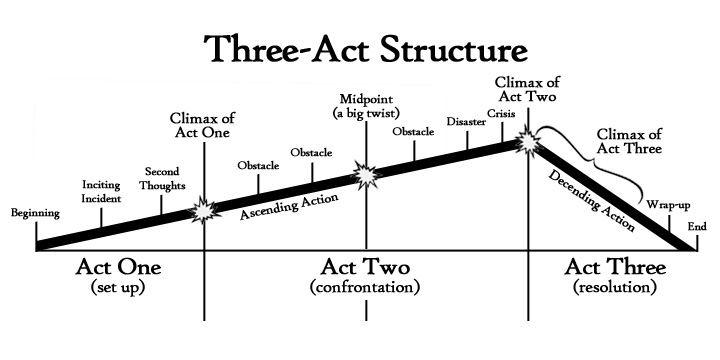
I will tell you in two words: "Zero Structure" none, nada, zip. If you want to become a good writer learn structure so you will know how to bend the rules. My advice, write to a 3 act structure. this way you will know EXACTLY where you are in your story, and where you need to go next. Also great for outlines.


yansusustories

Matchmaker of Handsome Men
Joined
Mar 13, 2019
Messages
621
Points
133
I think the answer to that question depends on what you're focusing on:

If we're talking about the text itself, I'd say the things I've noticed most is stilted dialog, too many fucking adjectives (plus points if you describe a room, a house or something similar and use 'big' for everything in a rich person's house and 'small' for the poor person's house) and filler words. It's something that a lot of people do but that is a quick fix in most cases. E.g., it's not hard to search for every instance of a specific word (you have a search function, after all!) and cut it out or exchange it for something better. While this won't save a shitty story, it can make a decent story look better already.

If we're talking about the process, I'd agree with everybody who mentioned edits and rewrites. Especially when you start out (and maybe also happen to be young - I've noticed that people who start when they're older often (not always) tend to skip doing some of the worse stuff), those steps are an absolute necessity. If you look at your text and think they aren't ... come back in two or three years and you'll likely cringe very, very hard. :blob_joy:

If we're talking writing in general: Taking the advice of more experienced authors when you're a beginner :blob_joy:
While this can be helpful (and it often will, let's be honest there), I'm of the opinion that you need to make some mistakes yourself. It helps with understanding why you should or shouldn't do some things. And also, just blindly following advice can make you lose out on some opportunities since writing can be a highly personal thing where everybody can benefit from finding their own way of working.
Like, back when I was teaching scientific writing I always told my students to try writing both more literature-based assignments and those that required doing their own experiments before they got to the end of their studies and I think part of this can be applied to creative writing as well. IMO, doing so helps with:
  • Finding out what is easier for you.
    This could help discern a direction you want to go in. In creative writing, this could be trying different genres or forms of storytelling, perspectives, etc. No experienced writer can tell you what you should do. They might have a blast writing 1st person or 3rd person but that doesn't mean that you'll like it as well and should use it. Maybe you'll have an easier time with the other or just like doing it more? Or maybe it'd fit the type of story you want to write more? You won't find out if you don't try. (You can look up the perks each one has though.)
  • Finding out what you need to work on.
    Like, you're great at the experimental stage but suck at the theory-stuff? Better go and work on the latter until it's decent (just decent can be enough in lots of places IMO) while making sure that you highlight what you can do well! Like, you excel at writing fight scenes? Then maybe write more fast-paced stories first that will give you ample opportunities to show that off. (And for those of you saying that what the readers say doesn't matter: Well, especially when you begin and/or don't have much intrinsic motivation, getting comments can be the deciding factor in whether somebody continues and makes it through the hard stages or not. So while you might not care, this might be very important to others until they are at a point where they are comfortable with their own writing and don't need any extrinsic motivation to continue.)
    Another thing I want to touch upon here: The others have mentioned quite a few things already that are considered good writing like not too much passive voice, showing instead of just telling, etc. Thing is, there are a million other things you could suck at. Personally, I even got a very nasty surprise when I switched from my native language where my readers loved my descriptions to English where I am so bad at them that it makes my own heart hurt. Certainly didn't expect that but at least I know what I need to do going forward (e.g., pay more attention to that issue, brush up on my vocabulary in that field, look at more info regarding the things I want to/have to describe, read over descriptions in English more carefully, ...)
  • Adapting a work-flow that works for you.
    Lots of people in this thread have mentioned planning. They're certainly not wrong. But not every person is the same. Personally, I have sat down and planned novels because of advice like this and they all turned out to be complete garbage. I just don't work that way. Since then, I've adapted my own way of working and I have to do way, way, way fewer revisions content-wise than I had to do under the old approach.
    So: Give all options a try (or two or three, just to make sure ...) and see what sticks for you personally. Whatever somebody else is doing may just work for you but it doesn't have to. In fact, it could even have a detrimental effect (like it had for me). So be courageous and try new paths. You might just find something that helps you a great deal going forward.
 

ChronicleCrawler

♠ItCrawls♠
Joined
Mar 30, 2019
Messages
324
Points
103
I would like to hear opinions from seasoned writers.
I got 4 points for ya bru.

One - Stopping, I mean totally stopping writing after a few obstacles. Every amateur writer/ all writers will meet their won respective obstacles. But only those who stay until their skills crystalized will succeed.

Two - Not having goals. Create your goals, like what I said in a few treads in SH. Build yourself with achievable goals. It will give you a bit of dopamine after you achieve these goals. It will help you in a long way.

Three - Putting your egg in one basket. Come on! Ya gotta have a job that could sustain you. Don't resign or stop going to Uni or HSchool. If you succeed and earn big time. That's the time you'll consider yar options. Be realistic mate!

Four - Listening to BS. I mean those comments that you write BS. I'll tell you that all your labor will bear fruit. Not now, but later as long as you continue. Nevertheless, nitpick those things that look reasonable. The constructive ones. Learn from those comments.
 

lnv

✪ Well-Known Hypocrite
Joined
Dec 24, 2018
Messages
487
Points
133
I would like to hear opinions from seasoned writers.

I don't know to say I'm seasoned, but one of the biggest mistakes is usage of tropes without thinking about if it actually fits into the story.

Tropes in themselves aren't a bad thing, but since the trope has been thought up by other writers, we subconsciously tend to skip a few steps of the thinking process. It's like copy and pasting code into a computer program without understanding it, then being surprised the results aren't what we expected.

Adoption of tropes should be done only after we deconstruct the trope and reconstruct it to better fit our stories.

So that situations like once in 10,000 year ancient tombs don't end up opening up every Tuesday. I'm sure we have seen this one often in xianxia where whenever the author wants to power level the MC, they throw out an ancient tomb that opens once every few millennium. Early xianxia would have only 1 tomb even or maybe 2 max. But later ones, they just appear every other arc. Aka, once every 10,000 year tombs opening up every Tuesday.

This is what happens when an author doesn't put much thought into the trope and how it fits into the story and just sticks it in there.


Another is the author creating an MC before they create the plot and forcing the MC to bend to the plot because he doesn't fit.
 

MajorKerina

Well-known member
Joined
May 2, 2020
Messages
465
Points
103
Thinking there are rigid rules they actually need to learn. They're more like guidelines. Punctuation? Look at Cormac McCarthy. Structure? See post-modernism. Convention and rebellion fall into and out of favor all the time.

That said, you need to practice in what feels most comfortable before you go breaking all the rules.

The personal advice I would give is that every centimenter of sincere rewriting comes from remixing what you have inside in ways only you can do. Don't try to write about a monkey lab if you've never checked one out online in a video or real life. But do consider a house with secret doors that lead to endless spaces containing the history of everything that happened inside a building if you are especially fond and knowledgeable of a location. Work out your feelings and frustrations. And remember, you will always write better in hindsight, so keep learning.
 

RepresentingCaution

Level 37 ? ? Pronouns: she/whore ♀
Joined
Apr 15, 2020
Messages
9,766
Points
233
As an editor for a small press, these are some my most common reasons for rejecting a manuscript. Lately, I'm just bored with everything I see, but I need to give my managing director a little something to tell the author in case they want to improve. I tell him flat-out what's wrong with the story, and he decides on whether to word it nicely or whether to just send a plain rejection letter without further comment.

  • Purple, pretentious writing
  • Infodumpy
  • Repetitive
  • Plot progresses too slowly
  • Formulaic plot
  • Stereotypical characters
  • Nauseating clichés everywhere
  • Nice agenda, but the author is grinding the agenda too hard
  • Too vanilla (no agenda at all, not right for our brand)
  • Passive language
  • No hook
  • Too many characters with too much backstory and not enough actually happening
 

TowerGuy

Member
Joined
May 23, 2020
Messages
34
Points
18
Too much exposition.

Getting lazy when the story gets to the grinding parts.
 

XianPiete

Bad Fiction Author
Joined
Apr 16, 2019
Messages
154
Points
83
The biggest mistake a new writer makes is thinking that experienced writers can give them good advice. Tell your story, it's done right when you get to the end.
 

BenJepheneT

Syro - Aphex Twin
Joined
Jul 14, 2019
Messages
5,347
Points
233
This would create a paradox of never-ending escalation of expectation and "not enough" mentality. You should never shackle yourself from using your best idea ever. Because as you learnt more and experienced more, you can always come back to rewrite, but you'll probably get even a better idea from those.
Inversely, I rather start off writing my personal best seller, because what a novice writer needs is passion and enthusiasm to commit to their hobby. Once you fire through your personal best seller, you'd find yourself having learned more, and continue on making better and better works. You'll always look back, thanking your best idea for having brought you this far.
 

GDLiZy

Tale Admirer
Joined
Dec 23, 2018
Messages
604
Points
133
Inversely, I rather start off writing my personal best seller, because what a novice writer needs is passion and enthusiasm to commit to their hobby. Once you fire through your personal best seller, you'd find yourself having learned more, and continue on making better and better works. You'll always look back, thanking your best idea for having brought you this far.
I also did that. To be fair, that story still isn't finished, and it's bad... but I never ran out of my passion writing it, even though I came back to it and cringe at its trash quality.
 

AliceShiki

Magical Girl of Love and Justice
Joined
Dec 23, 2018
Messages
3,529
Points
183
This would create a paradox of never-ending escalation of expectation and "not enough" mentality. You should never shackle yourself from using your best idea ever. Because as you learnt more and experienced more, you can always come back to rewrite, but you'll probably get even a better idea from those.
I dunno, I mean. I agree with the idea that writing your dream project makes your passion keep running and stuff, but... I don't think it hurts to write a few one shots before that?

At least to try out different styles and seeing what you're more comfortable with writing at least. I remember I loved 3rd person and hated 1st person with passion back in the day... Until I started writing and discovered I love 1st person and hate 3rd person! XD

I wouldn't find that out doing some experimenting in advance... So I think it's a good idea to make some one shots at least!
Speaking as, kind of a novice, I guess? I think one of the worst mistakes I tend to make is simply not planning out far enough ahead. Although honestly, that's probably less because I'm a novice and more because I'm super disorganised lol. It hasn't been a particular pain though. Since I have a rough idea what I'm working towards, it just means that the story I end up writing usually surprises me as much as it surprises the readers.
Adapting a work-flow that works for you.
Lots of people in this thread have mentioned planning. They're certainly not wrong. But not every person is the same. Personally, I have sat down and planned novels because of advice like this and they all turned out to be complete garbage. I just don't work that way. Since then, I've adapted my own way of working and I have to do way, way, way fewer revisions content-wise than I had to do under the old approach.
I feel just like Yansu on this topic!

I remember trying to write something I had very carefully planned out for NaNoWriMo and... I just hated it so so much! >.<

It was like... My writing didn't reflect what I wanted in my head and it just didn't make my story be as nice as my plans wanted it to be... It ended up so terrible that I gave up near the start.

Nowadays all I have is a vague idea of the story's ending and maybe a scene or two I wanna write. The rest goes with the flow as I need it. I'd rather have no plans and let the story create itself... It just works better to me~
 

thedude3445

Well-known member
Joined
Jun 6, 2020
Messages
149
Points
83
I gotta agree with Taxouck that it's overambition that can hurt novice writers when they are making their early stories. They have this big grand idea for an epic trilogy of fantasy novels, but then they write, well, novice-level work, and eventually quit about 1/3 of the way through the first book because the task was too daunting and their skills were not up to the task for the vision they wanted to achieve.

The most important thing for young writers in my opinion is to finish creative work, to have fiction, nonfiction, and poetry that is complete and ready for the world to see, hypothetically. It may not be good, but it's done, and the writer can look back on it years in the future and reflect on it much better than an unfinished draft. So I always recommend starting with short stories, flash fictions, and experimenting with style and formatting and various gimmicks that allow writers to have fun, and to finish work, without the pressure of working on some giant epic that they genuinely aren't ready to do. It's not about "saving" their passion project (because that project will change significantly as the writer grows), but just about letting writers enjoy writing all on its own.
 
Top