Ooooh I got one. A time-traveling story. Btw, these are all punny names from Google Translate. I don't know German though, so I can't attest to their accuracy. Like the first guy's name was basically translating as "obviously fake".
It is said that paintings are a window to the past and future. In fact, so much of a window that according to Chinese legend, one man painted something so realistic that he stepped inside and was never seen again. And according to the brilliant German physicist Rasend Wahnsinniger, time is like a river that flows in two directions from a central point. For example, if one could go back in time, about eighteen or nineteen years before their birth, it wouldn't matter if you were 30 or 80, they would emerge from the other end as that age. He further theorized that in order to protect the flow of time, clothing and money would convert itself to the same nation's money at the time. At least, that was his theory. Everyone knows that time travel isn't real.
Alois Schicklgruber stood inside an art school, certain that he was on the threshold of greatness. He corrected himself. His name was Adolf Hitler, and had had been since 1876. It was all too easy though, to think longingly of brighter times. Before that man's domineering treatment. Before his mother gave most of her savings to support his dream. Vienna had turned out to be more expensive than he thought, though. He barely had any money left for his education, but he was sure that once he had started, his art would sell like a Himbeer Kasestreuselkuchen. His mouth watered. Hitler had an extreme affinity for sweets that would later manifest in research of beets to refine sugar, and the by-product of beet sugar production, prussic acid that would later be used as part of the deadly poison Zyklon B. Anyway, he knew they would accept his entry into the school, as he had already passed the first round, and in mere moments he would face the second round.
The board announced the second test. "Draw a scene from history or from religion." Years later, in 1913, he would make a fairly decent Mary and Jesus painting, but at this time, he had few paintings of people, instead focusing on landscapes or architecture. While it was true, Hitler had little use for other people as he was more concerned with himself and his dreams, there was also the mattter of people not standing still to be painted while he sat outside buildings. All he had in his portfolio was lacking in this department. The board noticed, and were preparing to reject him, but one of the members suggested, "You have a real eye for architecture, son. You should be doing that instead." But Hitler had skipped school and would have to start over. And besides, this was his dream! No, he was confident he would succeed, they just had to look at his work and... "Sorry, you fail." Adolf asked, "Can I find out what I need to work on?" The board hesitated, but saw no point in keeping it from him, "Well, your paintings seem to lack even the very basics of human empathy. You could train your skill, but I don't know that it's something we can teach. It's like you think you are better than other people or something." Dismissed because of some quirk in his artwork?
Was für ein Schwachsinn! Nevermind that. He would find out who is responsible and his paintings would make history.
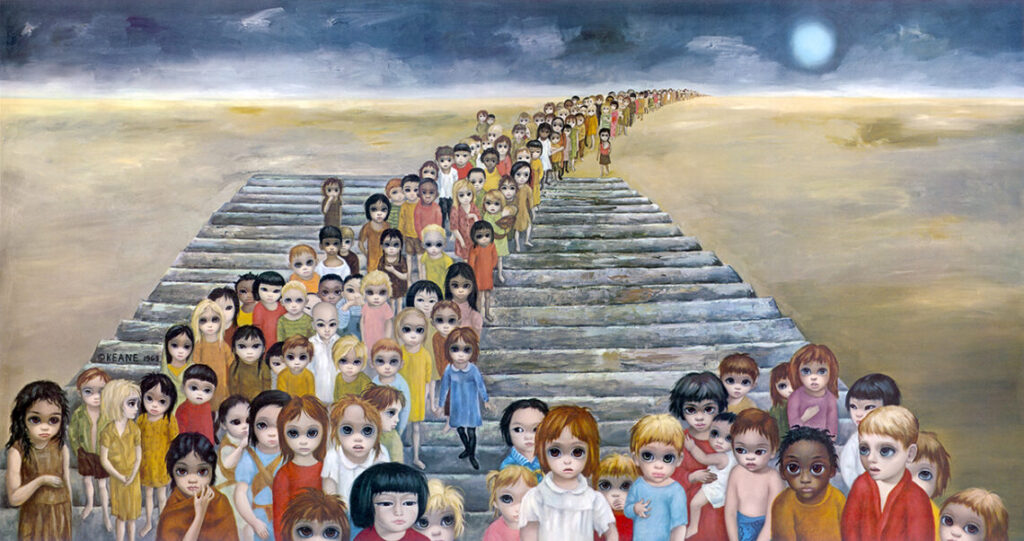
An old woman, two years before her death, painted a masterpiece that was never sold. She was also tired of the way art had progressed, and for this painting, she envisioned a scene in Vienna, Austria from long ago (based on several research materials). There was an archway that fascinated her, and she drew children of the era standing in front of it with rather large eyes. Like Hitler, there was a distinct quirk in all of her paintings, but they had always looked this way. Many people found them attractive, but the art dealers had for years rejected her. It was only through her extroverted husband... she sighed. Ex-husband. It was only through that deadbeat that she found some success, and she eventually had to leave him because he was a narcissistic jerk who bullied her and stole credit for her work. There was a trial, you see. "I think I'll call this painting
Yesterday Tomorrow," Peggy Hawkins said. And she also proceeded to make history with her art.
Hitler said outside showcasing his art, when a man named Mezuyef Be'ufanbrur walked by. The man was obviously Jewish, as would most of his clients be, from this period onward. He had short brown hair (though it looked odd, like he was wearing a wig), a white button up shirt, tucked into brown pants. He was portly, but his body fat was strange, reminiscent of someone shoving a pillowcase into his clothes for a play. The man had an exaggerated masculine swagger, and his voice seemed strangely high. He didn't even bother to Germanize his name. "These pictures... they are wonderful! This deer, just look at it! I will pay 100,000 marks for it."
Hitler was astonished, "You really value this art so much?!? But the art board in Vienna..."
The strange man laughed, his voice reminding Hitler of his mother, "What do those impostors know about artwork?!? Why, I will bet that some day, people will try to pass off a banana taped to the wall, and those same art critics will praise it as brilliantly original! If you ask me, the final solution to all that would be if someone had those art critics and some of the painters killed, and sensible people were allowed to review art. These people make the art world a laughingstock. Germany and Austria deserve better."
Time passed. Every now and then, one rich Jewish patron or other too interest over the next four years. There would be weeks of drought, then a big purchase, then more weeks. It was usually the same people. The portly man, an older woman, a girl between 15 and 19, who seemed to have money that she said was delivered by a rich patron that needed to be private. "My grandmother, Maggie, desperately needs your work to sell. She wants to show your art to people who appreciate it," she said. Or in other cases, "When full-sized artwork doesn't sell, you should try making postcards. Some of the poorer buyers can't afford the big stuff, but there are more of them than the snob artists." For some reason, the girl appear to grow younger over these four years, but Hitler wasn't very interested in people, so he asked few questions. Then these strange patrons dried up. But by this point, he had become a known artist, and he owned his own studio. Now Jewish art aficionados were paying great amounts of money to buy his work, and he was off the street. He had forgotten the faces of the original patrons. But he hadn't forgotten what they said about the art world. Indeed, he frequently encountered studios that would host the likes of Wassily Kandinsky, Ernst Ludwig Kirchner, Marcel Duchamp, Georgia O’Keeffe, and especially Piet Mondrian yet not give his works any coverage. He knew that he could sweep the art world by storm, but again and again, he saw it being passed over in favor of stuff like this.
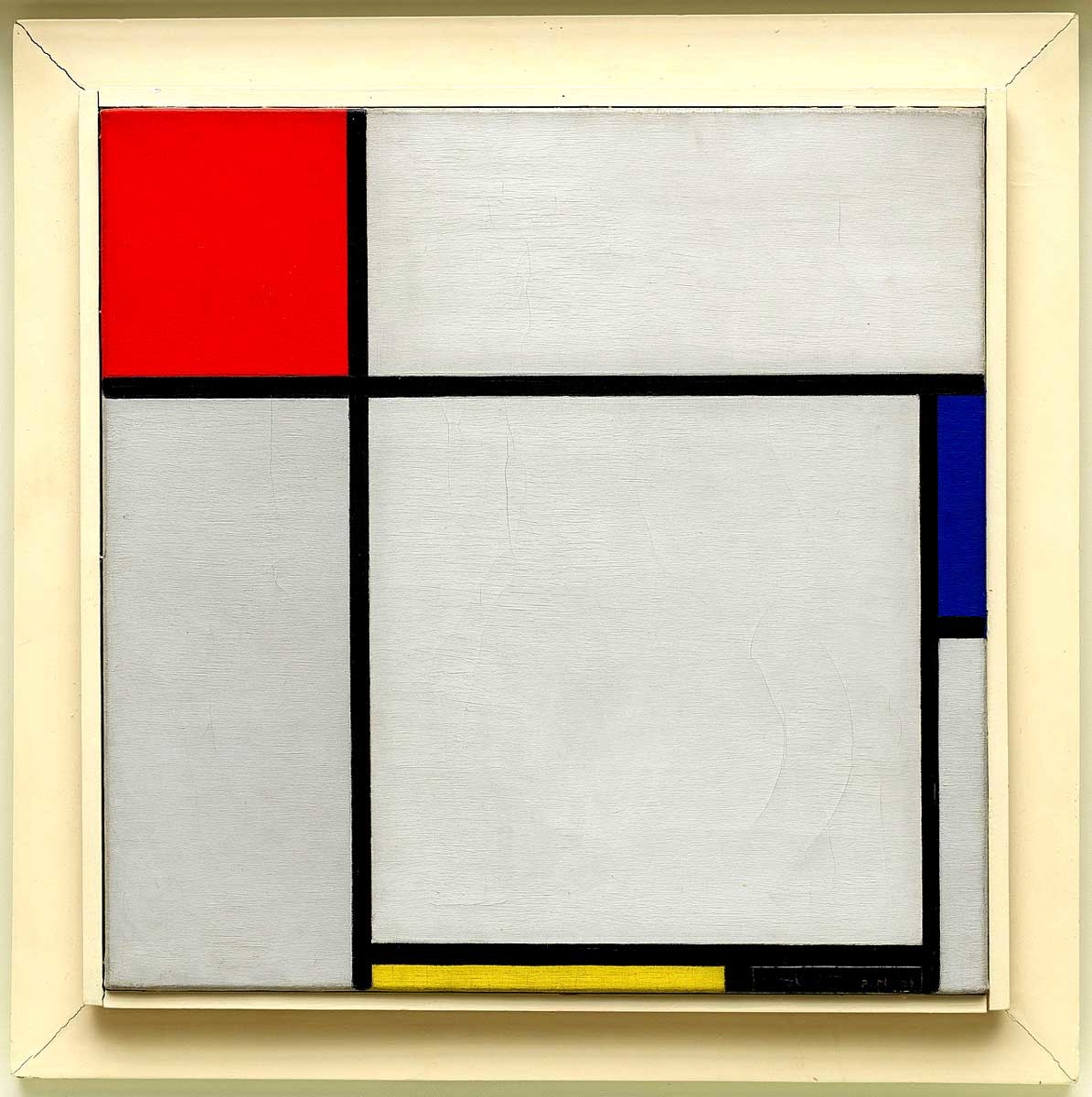
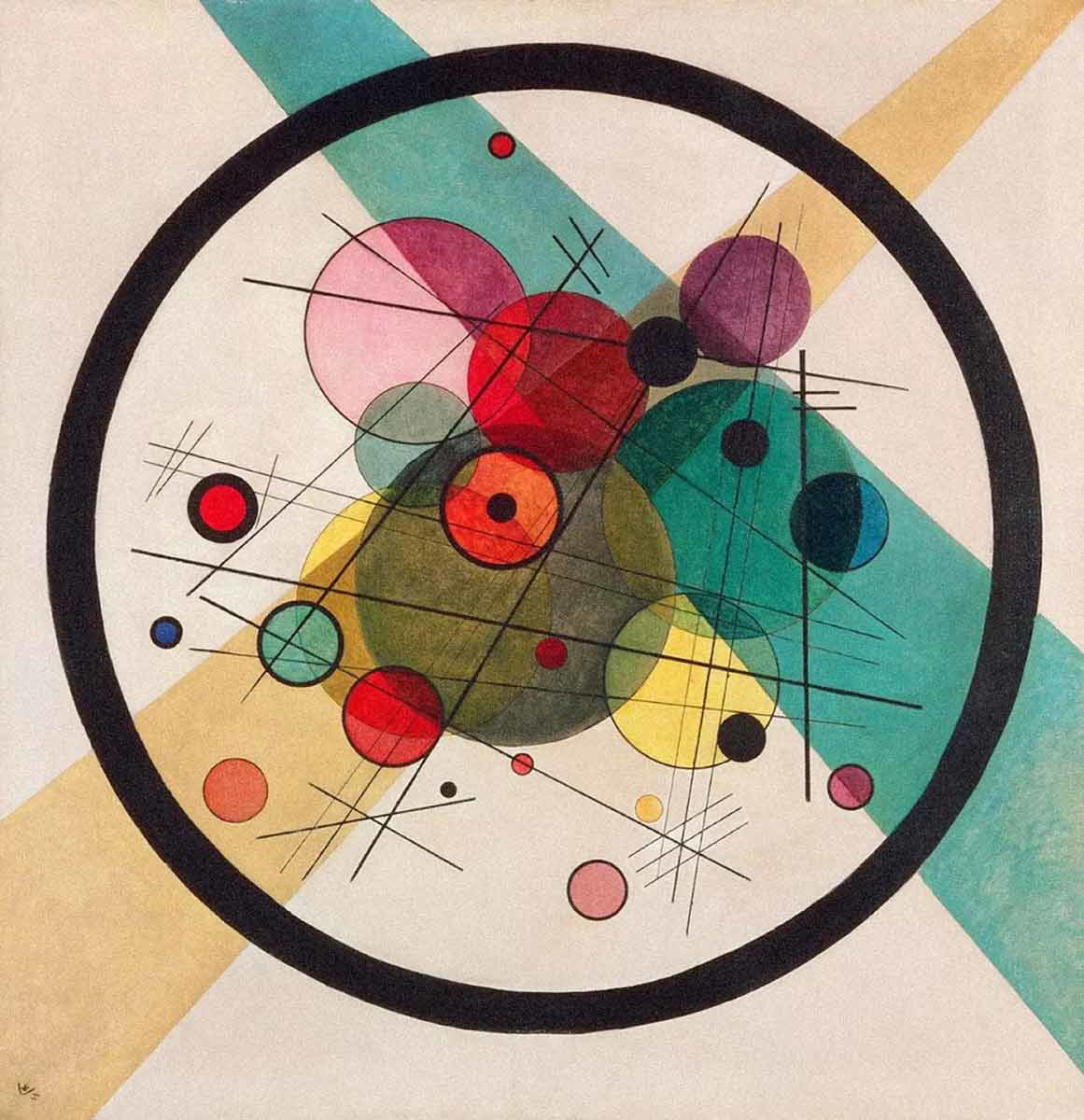
More time passed. Hitler became involved in the military, but his resentment against modern art only grew, while his love of Jewish patrons remained. After the war, he became a hero to the people, and they hung on his every word. So he ranted about how poor culture made the German people weak, and how someone had to do something to all the fake artists, fake critics, and art teachers that celebrated mediocrity. He compared the glorification of such work to the rise of communism, and instead formed a rival National Socialist party, where are was celebrated. Now, it wasn't told to the public that the way of dealing with these people was to round them up and send them to gas chambers. But as Hitler began to invade countries to assert his will, this truth came out later. Oh there were fewer hack artists than Jews in Europe, but he also killed a lot of handicapped and people whose jobs (like the art elites) struck him as fake or redundant. Eventually he was defeated, and you know the rest of the story.
Or do you? The wake of all this had a ripple effect on the art world. Abstract and minimalist painters were not allowed in art schools from this point on, and a painter named Margaret D. H. Keane suddenly had her work prominently displayed in art studios, postcards, and posters. She married her husband and had a child, but he no longer acted as he spokesperson, since she already had established credentials. For some reason, she had a brief period of paintings of Viennese women and children. Even more strange was that soldiers found mixed in with wigs and outfits from men and women, a series of Hitler paintings shoved in a box with a rather odd painting carbon dated to about 1912. Later are critics would say this painting was plagiarized except it was from another country years before she was born. And well, no known artists had her style.



 The war changed him, not the school. And the equivalent of bad novels back then.