You can roast me.
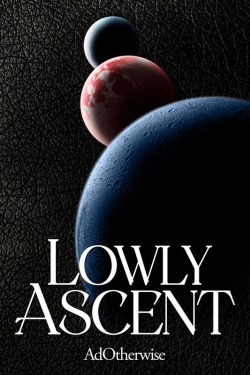
In a distant future, a man is resurrected after seven thousand years, his body rebuilt with machinery and his past reduced to fragmented memories. He is told he’s the first successful resurrection in history—but soon, he realizes the truth. This isn’t the first time. He has died...

www.scribblehub.com
Congratulations! You’ve created a world, some grand, intricate, deeply philosophical, and emotionally stirring world—at least, that’s what you
think you’ve done. But in reality? You’ve slapped together a pile of familiar sci-fi tropes, dipped them in amnesia sauce, cooked them until they were mushy enough, and shoved them at the reader like an overenthusiastic street vendor hawking goods at one of those unsanitary Chinese stalls, where you already know it’ll be bad for you in the long run. From the outside, sure, it looks decent—polished, structured,
coherent even, but then, the moment someone actually
thinks about it, the illusion shatters, showing the hollow, meaningless husk of a story that it truly is.
I made it to Chapter 2. Do you know what that means? It means I
tried. It means I gave you the benefit of the doubt, trudged through the vague, passionless prose, and held onto the microscopic hope that, maybe, you had something to say beyond
“look, my protagonist is sad and confused, now be intrigued”. But what did I find? A meaninglessness disguised as a narrative, an empty shell masquerading as a deep, psychological sci-fi webnovel.
The
worst part? On the surface, it’s not even terrible. The words are in the right order, the sentences make sense, and the structure is technically there. It works, at least linguistically. But a storytelling isn’t just words strung together—it’s a carefully woven language game of context, character, and action, a trinity of storytelling you butchered before the reader even had a chance to care. You failed the sequential “context, character, action” opening so hard that I’m genuinely impressed. It’s like watching someone try to bake a cake by throwing raw eggs, sugar, and flour against a wall and expecting a Michelin star.
Your synopsis? It’s fine, maybe even promising for sci-fi lovers. But then the sheer passivity and vagueness of your actual writing kills the mystery before it even starts. Do you know how impressive that is? Mystery is supposed to
pull a reader in, make them
need to know more, but instead of dangling a breadcrumb trail of intrigue, all I see is you just kind of wave your hands vaguely in the reader’s direction and mutter,
“Trust me, it’s mysterious.” That’s not how mystery works. That’s how people pretend they know what they’re talking about in college philosophy discussions.
And then, because you
really wanted to put the final nail in your story’s coffin, you went and spoiled the plot yourself. Yes, you, the unreliable narrator of your own premise. You wrote a synopsis that
promises one thing, then immediately delivered something so generic and uninspired that it made your own premise look like false advertising. You want the reader to care about your protagonist’s amnesia and suffering? Then maybe—
just maybe—give them a
reason to care about him beyond “
muh family”.
Ah, "muh family"—the time-honored tradition of lazy emotional investment. You really thought this was your ace in the hole, didn’t you?
“If I just tell the reader my protagonist lost his wife and child without even bothering to show them as compelling characters, they’ll instantly feel something!” No, they won’t. You know why? Because you didn’t develop MC as a person first. His grief, his pain, his
entire emotional existence is just a pre-packaged sob story, plucked from the endless void of overused sci-fi clichés and dumped onto the page as if tragedy alone is enough to create depth.
This brings to the amnesia, because hoo boy, if you’re going to saddle yourself with one of the hardest storytelling crutches to use effectively, you better know what you’re doing. You don’t, period. An amnesiac protagonist is already a gamble because you’re cutting the reader off from a character’s internal history, which means you have to compensate with an incredibly strong world and present-moment stakes, but what did you do? You left the logos of your world—its internal logic, its weight, its reason to exist—as an afterthought. Because of that, your
ethos (credibility) and
pathos (emotional impact) both died in a tragic double suicide, hands clasped like lovers in a bad Shakespearean tragedy, suffocated beneath the crushing weight of your reader’s indifference.
That means the
only thing that could have saved this story was the world itself. But guess what? That was already
dead too, alone in its sterile little room, before those two lovers even had the chance to perish. Because you didn’t establish the context first.
And this is where your biggest, most glaring flaw becomes impossible to ignore. Your world is built entirely out of clichés, but you structured your story as if the reader should already care about them. You threw in cryosleep resurrection from
Cowboy Bebop, cybernetic existentialism from
Ghost in the Shell, the evil corporate overlord from
every dystopian novel ever, the forced obedience pain chip from
Metal Gear, and the tragic lost family motivation from
Fallout 4. So, instead of making the world feel lived-in, you just paraded these elements around with no weight, no contrast, no meaning.
And that’s the problem.
Contrast. That one thing that separates a hollow, trope-riddled sci-fi disaster from a genuinely compelling narrative. The mind is a terrifying thing, even when it forgets. It leaves echoes. Flashes of what was, glimpses of how the world used to be, instinctive reactions that betray what has changed. And yet, your protagonist feels nothing. His thoughts don’t wander back to a past he can’t fully remember. His instincts don’t betray the kind of world he once lived in. He doesn’t notice the absence of something he should subconsciously expect.
Without contrast, your world isn’t a world—it’s just a setting. Therefore, your logos was
never alive to begin with.
So here’s the truth, laid bare for you to see: You know how to write, but you don’t know how to write well. You have technical competence, sure—you can string words into sentences, paragraphs into chapters, and plot points into something that
resembles a story. Storytelling isn’t just words and structure. It’s knowing how to make the reader
care, how to pull them into a world that
feels real, how to create a protagonist who
isn’t just a passive observer in his own damn story.
Go back. Learn actual storytelling techniques. Understand what makes a mystery intriguing instead of just “vague.” Figure out how to write a protagonist who drives the story forward instead of just reacting to everything like a confused NPC in a bad RPG. And for the love of all things literary, stop relying on sci-fi clichés like they’re a substitute for worldbuilding.
Because right now you’re not writing a story. You’re just writing words.